
18 Years of Injustice: The Story of Andrew Córdova and the Fight Against Torture in Mexico
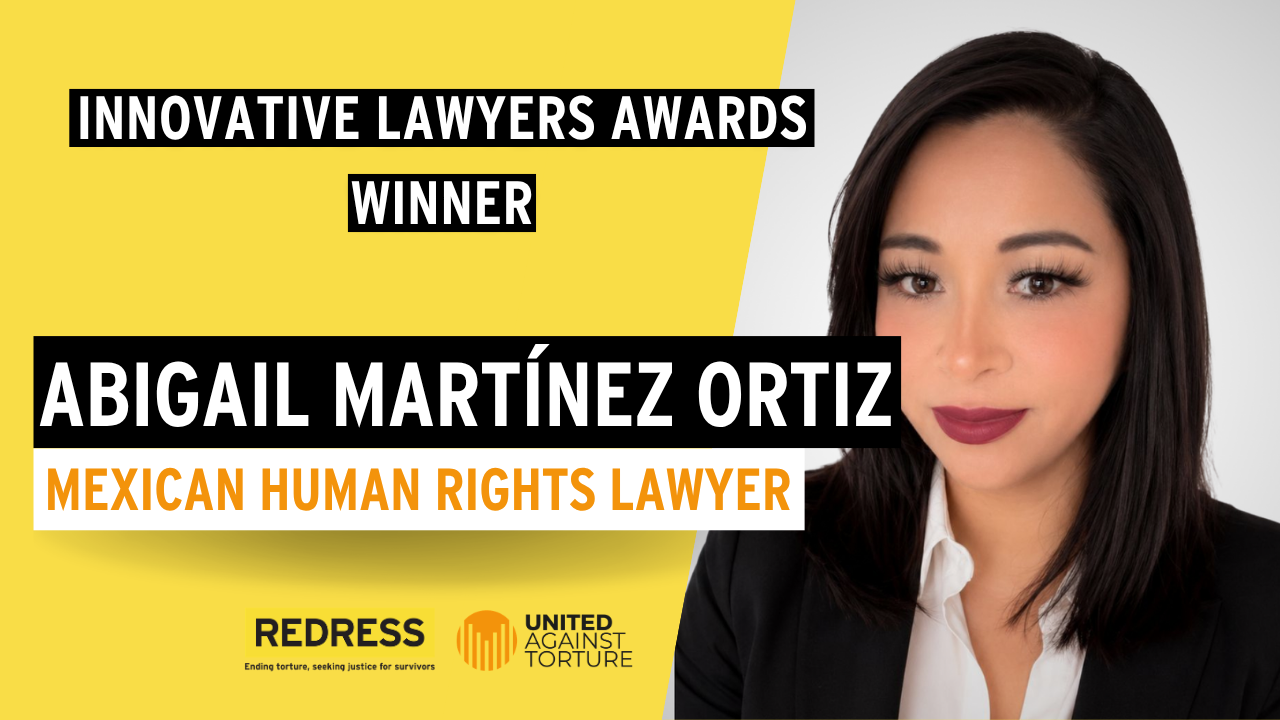
by Abigail Martínez Ortiz, Innovative Lawyers Awards Winner
Abigail Martínez Ortiz is a Mexican human rights lawyer and a winner of the REDRESS Innovative Lawyers Awards. She works as a collaborator at Tejiendo Redes contra la Tortura (Weaving Networks against Torture), a coalition of Mexican and international human rights organisations dedicated to eradicating state-sponsored and institutionalised torture. Through this work, they support survivors, promote legal reforms, and monitor human rights violations across Mexico.
In this blog, Abigail reflects on the case of Andrew Córdova, exploring his arbitrary detention and torture, as well as the nearly 18-year struggle of his family to prove his innocence. The story highlights systemic abuses, the lack of accountability, and the ongoing fight for justice, reparation, and meaningful human rights reform.
When Seeking Help Ended in Arbitrary Detention
April 26, 2008, changed our lives forever. My husband, Andrew Armando Córdova, went to the Red Cross in Tijuana to receive medical treatment after being wounded by gunfire in a public place. Instead of finding help, he was arbitrarily detained by officers of the Ministerial Police.
Andrew, a U.S. citizen, was unable to communicate with his family or with consular representatives from his country. He was also never informed of the reasons for his detention. Hours later, he was transferred to military facilities operated by the Ministry of National Defence (SEDENA), where he was tortured and forced to confess to crimes including organised crime, possession of weapons reserved for military use, and aggravated homicide. He was later transferred to Mexico City and subjected to arraigo for 91 days. Arraigo is a precautionary measure that requires a person to remain deprived of their liberty under the supervision of the Public Prosecutor’s Office to prevent them from fleeing or evading justice.
Three months later, a court in Baja California issued an arrest warrant against him on the grounds of alleged flagrante delicto (being caught in the act). Thus began a legal and human struggle that would last nearly 18 years.
A System That Allows the Fabrication of Guilt
For years, we faced a system that ignored the human rights violations committed against Andrew. His case is not an isolated one. In Mexico, legal concepts such as flagrancia (being caught in the act) and arraigo have enabled many people to be arbitrarily detained and subjected to torture.
Torture destroys lives, families, and entire futures. Under such extreme physical and psychological violence, anyone can be forced to confess to crimes they never committed.
Despite the complaints and evidence presented, the authorities showed no genuine interest in investigating those responsible for Andrew’s torture. The Prosecutor’s Office even argued that the crime of torture had expired under the statute of limitations, claiming that it was only prosecutable for one year. It is outrageous to hear such an argument when, after so many years, the physical and emotional consequences remain.
The UN Working Group on Arbitrary Detention Confirmed the Arbitrary Nature of the Detention
Our struggle eventually reached international bodies. Through Opinion 1/2022, the United Nations Working Group on Arbitrary Detention confirmed that Andrew’s detention was arbitrary and issued clear recommendations to the Mexican State.
Among its recommendations, the Working Group called for Andrew’s immediate release, full reparation for the harm caused, an effective investigation into the human rights violations committed against him, and legislative reforms to bring the concept of flagrancia into line with international standards. In Andrew’s case, the authorities claimed he had been caught in the act even though he was not arrested at the scene, failing to meet international standards such as temporal immediacy and personal immediacy.
In addition, Mexico’s National Human Rights Commission issued Recommendation 120VG/2023 concerning serious human rights violations, recognising the torture and other abuses committed against Andrew.
However, the Mexican State has yet to fully comply with these recommendations. It even falsely informed the United Nations that Andrew had already been released in relation to this case and was being held for another, non-existent criminal proceeding.
Freedom Came, but Justice Remains Unfulfilled
After nearly 18 years of struggle, Andrew was released on December 24, 2025, following a change in the precautionary measure that had kept him in pre-trial detention.
A few months later, on March 3, 2026, a judge determined that there was insufficient evidence to establish his guilt, and he was acquitted of all charges.
Although his freedom represents a major step forward, the damage inflicted upon him remains unrepaired. The Executive Commission for Victim Assistance has failed to provide adequate compensation or ensure comprehensive reparations. Instead, ongoing institutional failures continue to re-victimise us.
Building Networks in the Face of Pain
In the face of so much institutional violence, we found refuge in other families also seeking justice. This led to the creation of Tejiendo Redes contra la Tortura (“Weaving Networks Against Torture”), a support network where we share our stories, our pain, and our hope.
Through this network, we have learned that collective action makes us stronger. Mothers, fathers, daughters, sons, sisters, and friends continue to raise their voices on behalf of those who have been victims of torture and arbitrary detention.
We have also learned that pursuing justice comes at a cost. Many times, we must pause our advocacy to work, earn an income, and gather the resources necessary to continue. Yet even in the midst of exhaustion, we persevere because we know that silence only perpetuates injustice.
True Justice Has Yet to Arrive
Andrew’s freedom cannot erase nearly 18 years of suffering. True justice will come when no one is ever tortured to fabricate guilt, when authorities investigate those responsible for human rights violations, and when victims receive genuine and comprehensive reparations.
Our story is not simply about what happened to us. It seeks to shed light on a reality that thousands of families in Mexico face every day.
Because no one should have to spend nearly two decades fighting to prove their innocence.
About the Innovative Lawyers Awards
REDRESS’s Innovative Lawyers Awards recognise the vital work of new and emerging anti-torture champions, expose them to a broader peer support network, provide financial support to pursue public interest litigation and to inspire other lawyers and practitioners. This support is made available through the United Against Torture Consortium, which is funded by the European Union. The contents of the Innovative Lawyers Awards blog series are the sole responsibility of the authors and do not necessarily reflect the views of the European Union or REDRESS.