
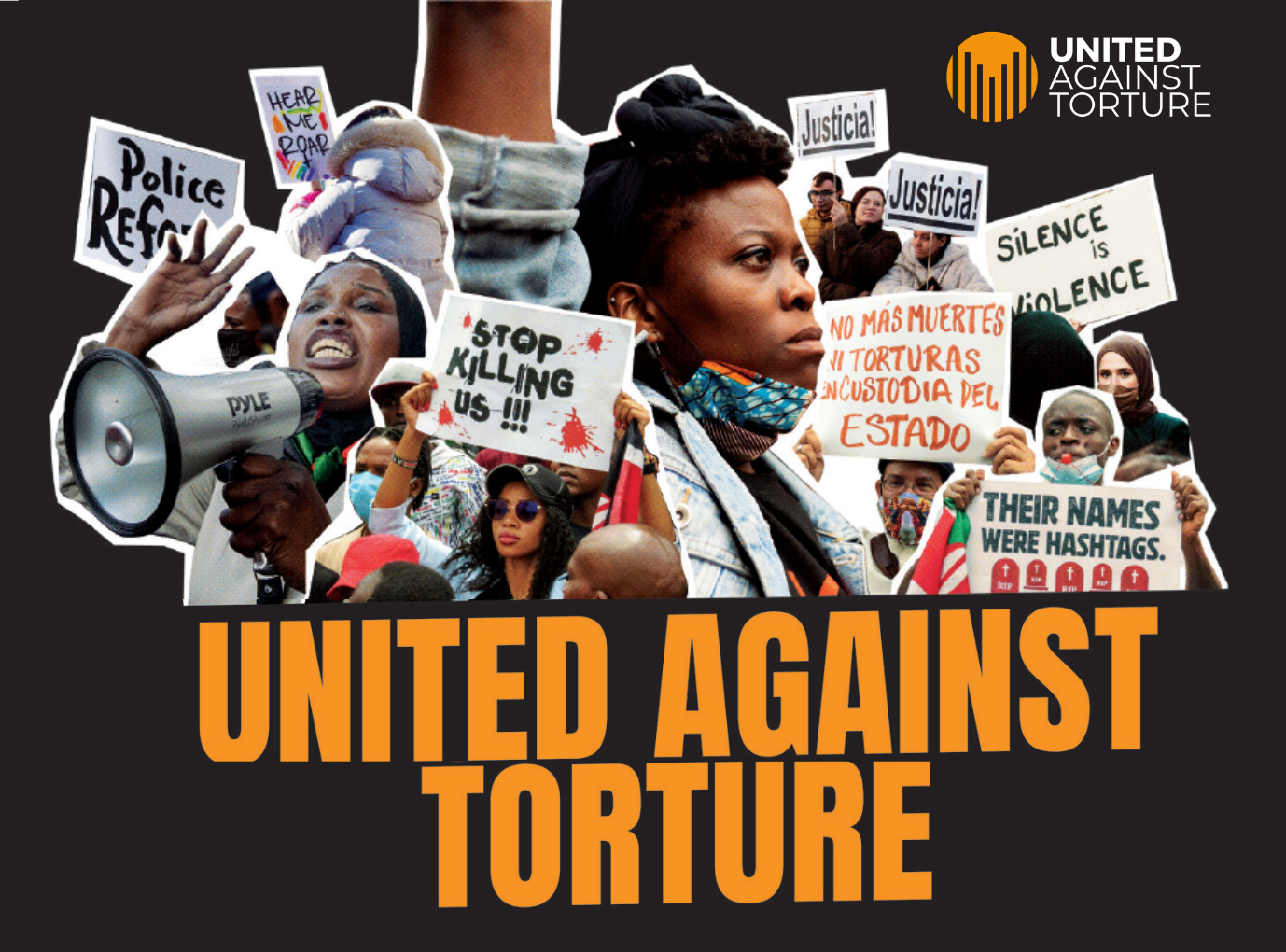
On 26 June, the United Against Torture Consortium Calls on States to Stand with Survivors and Strengthen Global Efforts to End Torture
On the International Day in Support of Victims of Torture, the United Against Torture Consortium (UATC), together with the European External Action Service (EEAS), will reaffirm its shared commitment to combating torture and other forms of ill-treatment worldwide during an event in Brussels.
The event invites participants to reflect on the significance of the recently adopted Charter of Rights of Victims and Survivors of Torture and Other Cruel, Inhuman or Degrading Treatment or Punishment, and to mark the opening of the exhibition Portraits of Resilience, featuring photographs and testimonies of survivors of torture from around the world.
Both the Charter and the exhibition, supported by the Consortium, highlight survivors as the strongest and most effective voices in the global movement to end torture. They are also a reminder that, despite the absolute prohibition of torture under international law, torture remains prevalent worldwide in a variety of contexts, including during armed conflict and in both custodial and non-custodial settings.
Conflicts, rising authoritarianism, shrinking civic space, attacks on the rule of law, and funding cuts have eroded decades of human rights progress. And yet, by pooling expertise and resources, the UATC has shown how coordinated action can overcome political resistance, funding constraints, and fragmented interventions, while engaging more strategically with committed institutions, including the European Union, to confront these challenges.
Our recently released Impact Report 2023–2026 highlights the progress made. Through coordinated, survivor-centred action, we have helped strengthen the movement’s core pillars: prevention, protection, accountability, justice, reparation, and rehabilitation. We have built the resilience and effectiveness of local civil society actors through sustained financial and technical support. We have also helped ensure that the UATC operates as an effective, globally coordinated system that reduces geographic and expertise gaps.
Torture is a complex global challenge that cannot be tackled in isolation. Real impact demands a united front, but crucially, it also requires putting survivors at the centre of this work, not as mere recipients of aid, but as active agents of change whose lived experiences must guide strategies, policies, and interventions. By joining forces and elevating survivor leadership, we can build a future where torture and other ill-treatment are prevented, protection and accountability are strengthened, survivors receive full reparation and rehabilitation and lead the pursuit of justice.
As survivors who sustained severe ocular injuries due to the unlawful use of force by public security officials reflected during their recent first international meeting in Colombia, supported by the UATC:
“When the state shoots at the eyes of its citizens, it seeks to blind society’s critical gaze. Today, the opposite is true; our wounded eyes share a vision of a better future.”
States now need to step up. They have an opportunity to match the efforts of survivors and those working on the frontlines by scaling this impact and helping to transform the anti-torture movement into an unstoppable force for human dignity worldwide.
About the UATC
The UATC is an EU-funded project that pools the strengths and expertise of six leading anti-torture organisations (APT, FIACAT, IRCT, OMCT, Omega Research Foundation, and REDRESS), in partnership with over 200 civil society organisations and other partners in more than 120 countries, to empower survivors as agents of change and advance justice, accountability, prevention, protection, and rehabilitation.
For more information, please contact:Marie Salphati, UATC Coordinator, at [email protected].