
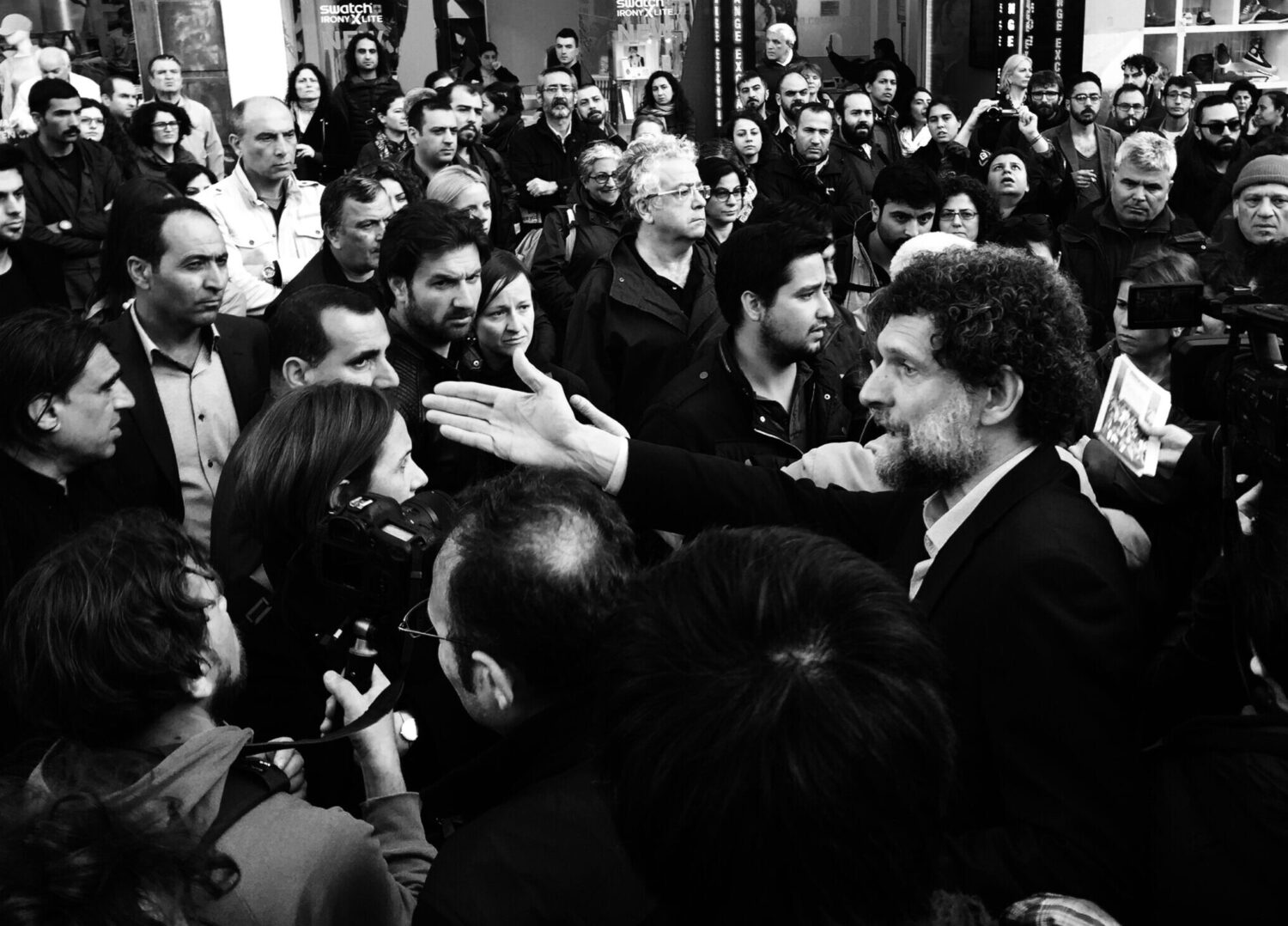
European Court Orders Immediate Release of Osman Kavala in Türkiye, Finding Systemic Misuse of the Judicial System to Silence Dissent
REDRESS welcomes the Grand Chamber’s judgment in Kavala v. Türkiye (No. 2) finding that Türkiye’s continued detention of Osman Kavala, a prominent Turkish philanthropist and political activist, despite two European Court of Human Rights (ECtHR) judgements ordering his release, violated multiple rights under the European Convention on Human Rights (ECHR), including Article 3 (the right to be free from torture and ill-treatment).
The Court again called on Türkiye to secure Kavala’s release, remove the consequences of his conviction and provide effective redress.
It also found that the case reflects a broader systemic problem in Türkiye involving the detention and prosecution of political opponents, journalists and human rights defenders through a judicial system lacking independence and impartiality. The Court noted the need for reforms to avoid the instrumentalisation of criminal proceedings against dissenters, describing this as a misuse of the State’s “machinery of repression”.
REDRESS welcomes this decision and urges Türkiye to comply with this judgment immediately, bringing to an end almost a decade of Kavala’s arbitrary detention.
However, the judgment leaves unresolved a critical question: whether prolonged arbitrary detention maintained in defiance of binding ECtHR judgments may itself amount to torture or other ill-treatment under Article 3.
REDRESS intervened before the Grand Chamber on this issue, arguing that indefinite arbitrary detention can amount to torture and other ill-treatment, particularly where a State refuses to implement a binding judgment ordering an individual’s release and thereby exposes them to a foreseeable risk of prolonged suffering.
The Grand Chamber found a violation of Article 3 because Kavala had been sentenced in Türkiye to “aggravated life imprisonment” without any realistic prospect of release or review. However, it considered “not necessary” to determine whether the length and consequences of his detention were also a breach of Article 3.
Kavala has been deprived of his liberty since 2017 in connection with the Gezi Park events. In the 2019 judgment, the ECtHR found his detention arbitrary and pursued for an ulterior purpose, and indicated that Türkiye should take measures to secure his release. In 2022, the ECtHR found that Türkiye had failed to comply with the 2019 judgment because Kavala remained detained. He subsequently brought a second application challenging the continuation of his detention. In December 2025, the ECtHR referred the case to the Grand Chamber due to the profound significance of the case.
In its intervention, REDRESS highlighted the growing recognition in international law and practice that indefinite arbitrary detention may in itself constitute torture or other ill-treatment because of the profound and long-lasting suffering it causes. REDRESS also drew on established international jurisprudence confirming that States have a positive obligation to prevent and remedy torture and ill-treatment, arguing that this obligation may be engaged where a State refuses to implement a binding judgment of an international court ordering the release of an arbitrarily detained individual.
By not addressing these arguments, the Grand Chamber missed an opportunity to clarify whether the suffering caused by years of unlawful detention, uncertainty and powerlessness may itself amount to torture or ill-treatment, and whether persistent failure to implement a binding order of release can engage a State’s positive obligations under Article 3.
Such clarification could have strengthened safeguards against the growing use of arbitrary detention to target human rights defenders, civil society actors and political dissidents, and contributed to the development of Article 3 jurisprudence in line with evolving international standards, including the recognition by the former UN Special Rapporteur on Torture that prolonged arbitrary detention, especially when coupled with judicial arbitrariness and the deliberate instrumentalisation of criminal proceedings, can inflict severe psychological suffering. Such an approach would have also reinforced the authority and effectiveness of the Convention system by recognising that persistent non-compliance with binding ECtHR judgments may engage some of its most fundamental guarantees, including States’ positive obligations under Article 3.
The Court also found violations of Kavala’s rights to liberty (Article 5), a fair trial (Article 6), freedom of expression and assembly and association (Articles 10 and 11), as well as Article 18, finding that restrictions on his rights had been pursued for an ulterior purpose.
Chris Esdaile, Senior Legal Advisor, said:
REDRESS welcomes the Grand Chamber’s reaffirmation of Mr Kavala’s rights and its call for his release and effective redress. Türkiye now has the chance to demonstrate it is serious about complying with the Strasbourg Court and should do so without further delay. At the same time, it is regrettable that the Grand Chamber did not take the opportunity to develop its jurisprudence on the relationship between arbitrary detention and torture or ill-treatment, or to recognise the profound psychological impacts of States’ failure to implement judgments of the European Court.
For more information, please contact Eva Sanchis, Head of Communication of REDRESS, on [email protected] or +44 (0)7857 110076.
Photo by: Janbazia CC 4.0