
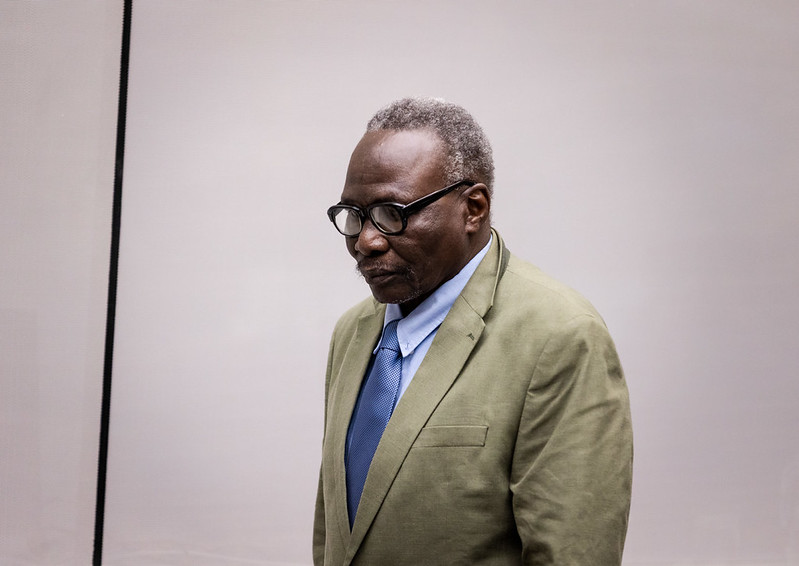
Ali Muhammad Ali Abdl-Al-Rahman (third party intervention)
Ali Muhammad Ali Abd-Al-Rahman (Ali Kushayb), a leader of the former Janjaweed militia, was convicted by the International Criminal Court (ICC) of 27 counts of crimes against humanity and war crimes carried out in Darfur, Sudan, committed between August 2003 and April 2004. Following his conviction, the ICC is expected to issue one of its largest ever reparations orders, awarding reparations to thousands of victims of his crimes.
The majority of Ali Kushayb’s victims are in highly vulnerable situations of displacement, either within Darfur amidst renewed atrocities, or in refugee camps in neighbouring countries. The inability of victims to return to their fertile ancestral lands, and the limited ability of the ICC to influence this, further complicates the implementation landscape.
CASE BACKGROUND
The counter-insurgency campaign led by the then-Government of Sudan (GoS) and its allied forces, which began in April 2003, is one of the most devastating in Sudan’s history. GoS forces, including the militia, launched a large-scale, systematic attack against the civilian population of Darfur, targeting the Fur, Masalit, and Zaghawa.
The ICC’s Office of the Prosecutor issued arrest warrants for six individuals. However, the ICC obtained custody of only Ali Kushayb, after he surrendered himself to authorities in the Central African Republic in June 2020. His trial began in 2022, with the Prosecution’s case focusing on four crime locations – Mukjar, Deleig, Bindisi, and Kodoom. 1,591 victims participated in the trial, mostly belonging to the Fur community.
On 6 October 2025, ICC Trial Chamber I (the Chamber) found Ali Kushayb guilty of 27 counts of crimes against humanity and war crimes. He was found guilty as a direct perpetrator, a co-perpetrator, and for ordering the Janjaweed to commit certain crimes. The decision arrived during a perilous moment for the communities victimised by Ali Kushayb and his affiliates. Two decades after the events at issue, Darfur is once again embroiled in a devastating armed conflict, which has extended across the country. While the Janjaweed was formalised under former President Omar al-Bashir as the Rapid Support Forces (RSF), they have continued to be implicated in international crimes – including redeploying the same scorched earth tactics heard by the ICC against civilians in Darfur and beyond during the current armed conflict.
On 9 December 2025, the ICC sentenced Ali Kushayb to 20 years in prison. On the same day, the Chamber ordered the parties and participants to file submissions on reparations and invited interested organisations to request leave to make their own submissions. On 2 April 2026, the Chamber scheduled an oral hearing on reparations for 8 September 2026. Shortly afterwards, the Chamber granted requests by four third party interveners (also called “amici curiae”) to participate at the hearing – including a group led by REDRESS and Rights for Peace.
INTERVENTION
On 4 June 2026, REDRESS, Rights for Peace, Darfur Women Action Group Uganda, Darfur Network for Human Rights, and Queen’s University Belfast Human Rights Centre, submitted a third-party intervention requesting the ICC to adopt a creative, pragmatic approach to reparations that can evolve as victims’ life circumstances change. Our submission was closely informed by focus group discussions facilitated by Rights for Peace with 121 victims of Ali Kushayb in Sudan and South Sudan.
Specifically, our submission:
- emphasised that victims’ forced displacement from their ancestral lands destroyed families, communities, livelihoods, services, education, and cultural continuity, resulting in destitution, entrenched trauma, and transgenerational harm that has reverberated across generations of victims.
- requested the Chamber to adopt appropriate presumptions of victimhood and harm appropriate to the nature of Kushayb’s crimes and victims’ circumstances.
- encouraged the Chamber to order comprehensive reparations and empower the TFV to sequence their delivery, arguing that making a reparations order based solely on what is feasible to implement now would fall short of the reparations that victims are owed to comprehensively redress their harms.
- highlighted the need to co-create reparations with victims, with particular attention to especially vulnerable victims, identifying suitable implementing partners, and developing suitable risk mitigation strategies (particularly for victims living in areas controlled by the RSF).
- suggested that the Chamber make certain declarations concerning the nature and consequences of victims’ displacement from their ancestral land, including to support any future transitional process. In addition, we requested the Chamber to order other satisfaction measures to support victims’ future land restitution, including supporting steps to preserve and supplement evidence of victims’ land entitlements.
- provided detailed guidance on appropriate and feasible reparations measures, including:
- symbolic monetary awards,
- urgent, individualised physical and psychological rehabilitation,
- community-level psychological rehabilitation services,
- cash assistance, vocational training, and other socio-economic support to build livelihoods, and
- supporting education for both adult and child victims, including local schooling, scholarships, and educational grants.
On 8 September 2026, we participated at a public hearing on reparations, providing additional analysis to the Chamber on the framework, design, implementation, and oversight of reparations. Our oral interventions focused on:
- concrete risk mitigation strategies, which were shared with the Chamber in closed session due to the security situation.
- highlighting the value of the Chamber acknowledging in its reparations order that bona fide purchasers of the victims’ land after their unlawful displacement would have been on constructive notice and therefore would not have acquired good title.
- encouraging the Chamber to facilitate the continued involvement of the Common Legal Representative of Victims once the draft implementation plan is approved.
The Chamber is expected to make its reparations order in early 2027.
QUICK FACTS
Case name: The Prosecutor v. Ali Abd-Al-Rahman
Court/Body: The International Criminal Court
Trial Judgment: Convicted, 6 October 2025 (under appeal)
Date Intervention Filed: 4 June 2026 (hearing on 8 September 2026)
Current Status: Awaiting Order on Reparations.
Photo by: ICC-CPI