
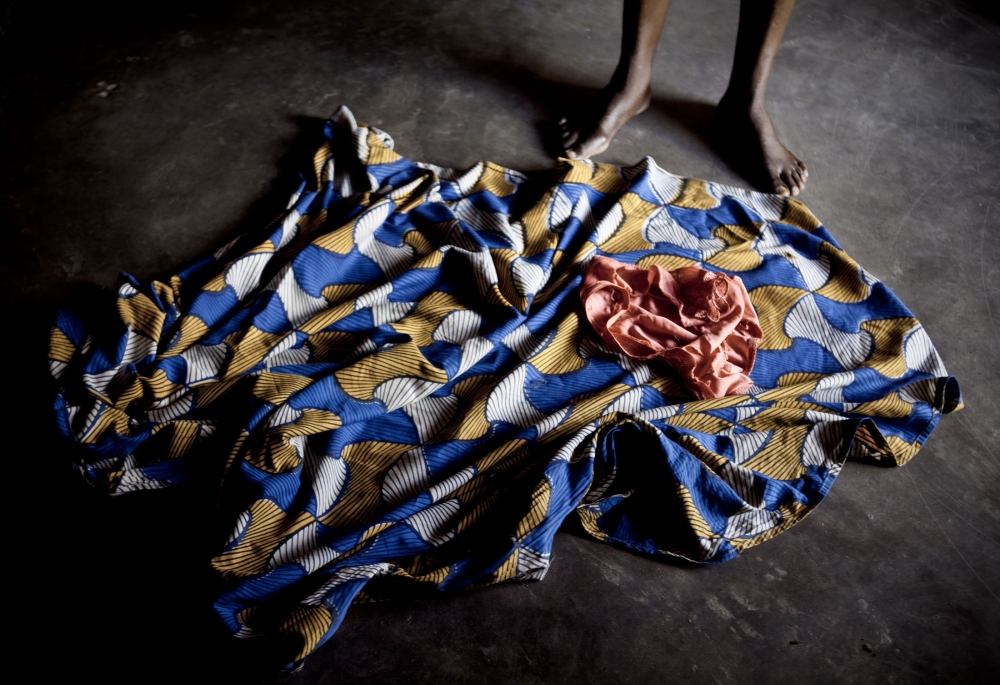
S.A. v DRC
S.A. (a pseudonym given to her to protect her identity) was raped by a member of the Armed Forces in the late 2000s, during the armed conflict in the Eastern Democratic Republic of the Congo (DRC).
S.A.’S STORY
S.A. was raped by a soldier in the Armed Forces in the late 2000s, who was known to her. He committed the attack after threatening her husband and children. He also stole all of the family’s savings. S.A.’s attacker was convicted by a military domestic court. In its judgment, the domestic court awarded compensation to S.A. and ordered the return of her property. This reparation award was made against both the attacker and the government of the DRC as the attacker was acting as a state agent. Like many other rape victims, however, S.A. has not received the compensation from the government up to today despite her attempts to enforce the judgment. One of the main obstacles for enforce the reparation decision in the DRC is that the legislation prevents that public assets can be used for those procedures.
ACTION FOR JUSTICE
On 21 November 2014, REDRESS and Synergie pour l’assistance judiciaire aux victimes de violation des droits humains au Nord Kivu (SAJ) filed a communication with the African Commission on Human and Peoples’ Rights (ACHPR), on behalf of S.A. seeking the enforcement of the judgment and additional systemic measures to facilitate the realization of reparation awards and prevent sexual violence.
The communication sets out the legal framework of court-ordered damages in the DRC and the obstacles faced by victims when seeking enforcement of these awards.
REDRESS and SAJ argue that the failure of DRC to provide any payments to S.A. constitutes a violation of the right to a remedy and reparation for victims of violence against women enshrined in the African Charter on Human and People’s Rights and the Protocol to the Charter on the Rights of Women in Africa.
On 2 February 2017, human rights organisation TRIAL filed an amicus curiae brief to the African Commission on Human and Peoples’ Rights in this communication on reparation for sexual violence in the DRC.
As reparation, the applicants sought full compensation, including the effective payment of the reparation award and interest accrued since the adoption of the decision. They also requested broader measures of a general nature, including legal reforms to remove obstacles to the enforcement of reparation decisions against the State; the creation of specific budget lines to ensure the payment of reparation awards ordered by domestic courts against the DRC; judicial reforms to guarantee access to justice for women victims of violence; the establishment of a system for disaggregated data collection on cases of sexual violence; and the creation of an administrative reparation programme, among others.
During 2024 and 2025, the applicants repeatedly provided the ACHPR with updated information on S.A.’s medical and psychosocial condition, highlighting the urgent need for a prompt decision by the Commission.
THE OUTCOMES
The communication was declared admissible at the 20th extraordinary session of the African Commission on Human and Peoples’ Rights held from 9 to 18 June 2016.
The applicants filed their merits and reparation submission.
The ACHPR adopted its merits decision in July 2023; however, the decision was only communicated on 18 November 2025. While the Commission found no violation of the prohibition of torture—on the basis that the DRC had already recognised its responsibility for the conflict-related sexual violence suffered by S.A. through a conviction by domestic courts—it nevertheless held that the DRC had failed to comply with its obligation to enforce judicial decisions. This failure constituted a violation of the right to a fair trial and of the duty to ensure reparation for victims of conflict-related sexual violence under the African Charter and the Maputo Protocol. Owing to the non-payment of the compensation awards, the Commission also found a violation of the right to property.
In addition, the Commission found that the DRC had failed to fulfil its obligation to adopt legislative measures to bring its domestic legal framework into compliance with the African Charter and other applicable human rights standards, as existing legislation prevents victims from enforcing compensation awards against the State.
In the reparation section of the decision, the Commission ordered the DRC to enforce the decision by paying full compensation to S.A., including an increase of 6% to account for interest accrued since the adoption of the decision. The Commission also requested the adoption of legislative measures to ensure the effective execution of decisions adopted by domestic courts
The decision by the ACHPR is still pending implementation.
QUICK FACTS
- Case Name: S.A. v. Democratic Republic of the Congo
- Court/Body: African Commission on Human and Peoples’ Rights (ACHPR)
- Date Filed: 21 November 2014
- Current Status: Communication declared admissible. Merits decision pending.
- Legal representation: REDRESS and SAJ
KEY WORDS
The African Charter on Human and People’s Rights (also known as the Banjul Charter) is a regional human rights instrument that is intended to promote and protect human rights and basic freedoms on the African continent.
The Protocol to the African Charter on Human and People’s Rights on the Rights of Women in Africa, better known as the Maputo Protocol, guarantees comprehensive rights for women. These include the right to take part in the political process, to social and political equality with men, improved autonomy in their reproductive health decisions, and an end to female genital mutilation.
Sexual violence refers to any act of sexual nature which is perpetrated by force, threat, coercion, by taking advantage of a coercive environment or the victim’s incapacity to give genuine consent.
Amicus curiae means a person or group who is not a party to a lawsuit but who offers independent expertise to the court on specific matters relevant to the lawsuit at hand.
Photo by Gween Dobourthoumieu / IRIN.