
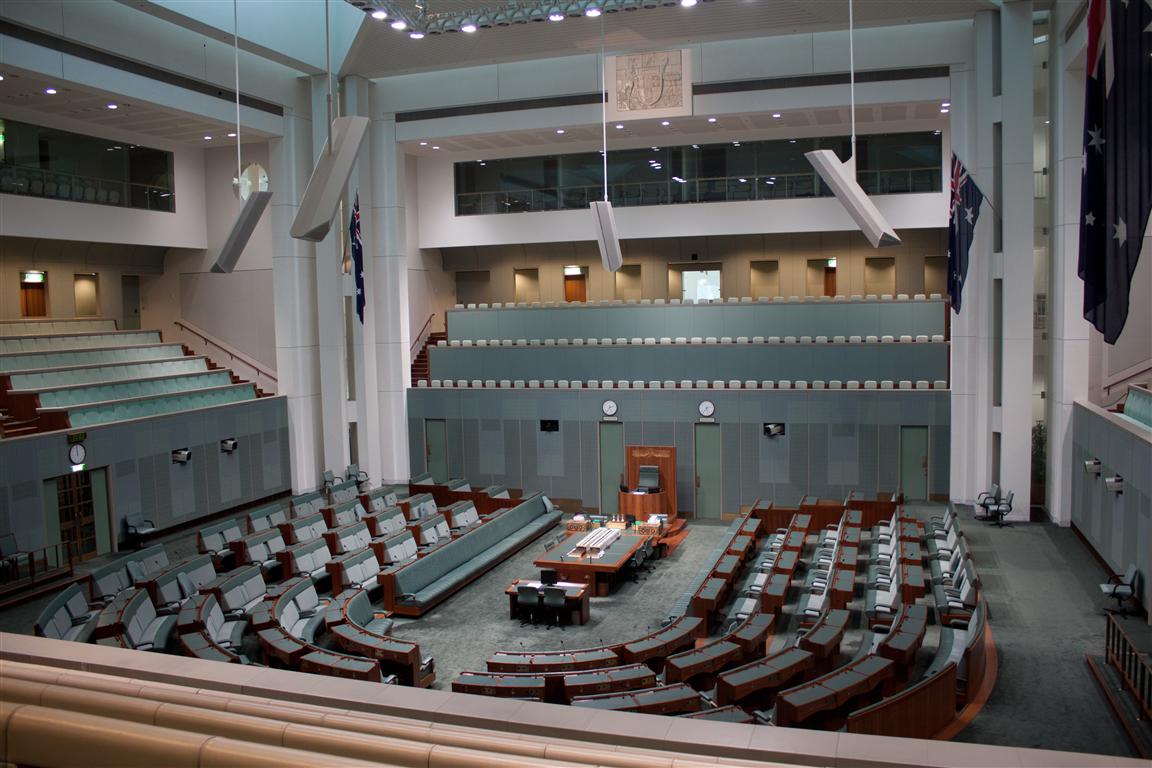
Australian Government Responds to REDRESS Recommendations on Behalf of Survivors
By Reesey Du Pont
Over the past decade, the international community has seen a steady rise in the practice of State hostage-taking, whereby State actors detain civilians for diplomatic leverage. Those subject to State hostage-taking often suffer physical and mental abuses which amount to torture. Not only does the practice place individuals at a higher risk of torture and ill-treatment when they travel abroad, but it also undermines the UN Charter and the full implementation of the Convention against Torture and Other Cruel, Inhuman, or Degrading Treatment or Punishment.
Dr. Alice Edwards, former UN Special Rapporteur on Torture, recently stressed the gravity of the issue:
“In my four years as United Nations special rapporteur on torture and other ill-treatment, my caseload returned again and again to hostage diplomacy: individuals detained abroad not for anything they had done but for what they were worth. I dealt with families as angry with their own governments as with the kidnappers – because they felt ignored and their demands unanswered…They wanted to know that someone senior was responsible, and that the file would not go quiet when the official handling it moved on.”
Fortunately, there are signs of progress when it comes to the international community’s response to State hostage-taking. In 2021, Canada launched an initiative to address the wrongful detention of its nationals, leading to its creation of the Declaration Against Arbitrary Detention in State-to-State Relations, establishment of an Independent International Panel on Arbitrary Detention in State-to-State Relations, and designation of a Senior Official for Hostage Affairs (SOHA) to lead its response to hostage-taking. The US has a similar role of Special Presidential Envoy for Hostage Affairs. Following suit, this year the UK Government appointed its first Envoy for Complex Consular Detentions.
In the midst of these reforms, in June 2024, Australia’s Senate Foreign Affairs, Defence, and Trade Committee launched an inquiry into the wrongful detention of Australian nationals and the use of sanctions to counter hostage diplomacy.
At the request of Australian survivors of State hostage-taking, in August 2024 REDRESS made a submission to the Australian Senate Inquiry. The submission stressed the harms of State hostage-taking, including torture and ill-treatment, and recommended policy solutions to the Australian Government to enhance its protection of Australian nationals, and to promote prevention and accountability for State hostage-taking.
In their concluding report, the Senate Committee responded to a number of recommendations produced by independent experts and human rights organisations. For example, they included several recommendations made by REDRESS, such as the immediate and public condemnation of arbitrary detention for diplomatic leverage, the creation of a role within the Australian Government responsible for State hostage-taking, and the need for a comprehensive policy response to States engaging in hostage diplomacy, including the use of Magnitsky-style sanctions.
The Senate Committee criticised the Australian Government’s reluctance to apply sanctions against individuals responsible for State hostage-taking, despite the credible evidence presented by REDRESS that identified 20 Iranian officials involved in the wrongful detention of Australian nationals. The Senate Committee emphasised that “a symbolic stance is not enough and must be backed by concrete actions.”
Unfortunately, the Senate Committee did not include recommendations that would promote accountability and domestic remedies for State hostage-taking, such as the use of universal jurisdiction or the introduction of a legal right to consular assistance.
The Australian Government responded to the Senate Inquiry in June 2026. It announced that it would update its assessment framework used in cases of wrongful detention and refer such cases to the Department of Foreign Affairs and Trade’s complex case team “for specialised strategy development and advocacy”.
While the Government agreed that it would acknowledge the use of hostage-taking for diplomatic leverage, it stated that it would not routinely publicly identify individuals who are wrongfully detained or condemn States complicit in their detention.
Although the Australian Government expressed broad support for multilateral agreements to put an end to the use of arbitrary detention as a diplomatic tool, it did not acknowledge the Senate Committee’s critique of its handling of Iranian sanctions, nor did it consider developing more comprehensive sanctions measures such as Magnitsky-style sanctions.
Reflecting on the impact of the Government’s response, Dr Kylie Moore-Gilbert, Director of the Australian Wrongful and Arbitrary Detention Alliance and survivor of State hostage-taking stated:
“I welcome the Australian government’s commitment to strengthening its policies and processes around the wrongful detention of Australian citizens abroad. The Department of Foreign Affairs and Trade’s commitment to develop a set of definitional criteria to identify consular cases of wrongful detention is a particularly positive step…We are disappointed that the Australian government has declined to follow the lead of its allies in Canada, the US and UK in appointing a standalone envoy for wrongfully detained Australians and will continue to advocate for the adoption of this important measure.”
Photo: CC BY-NC-SA 2.0