
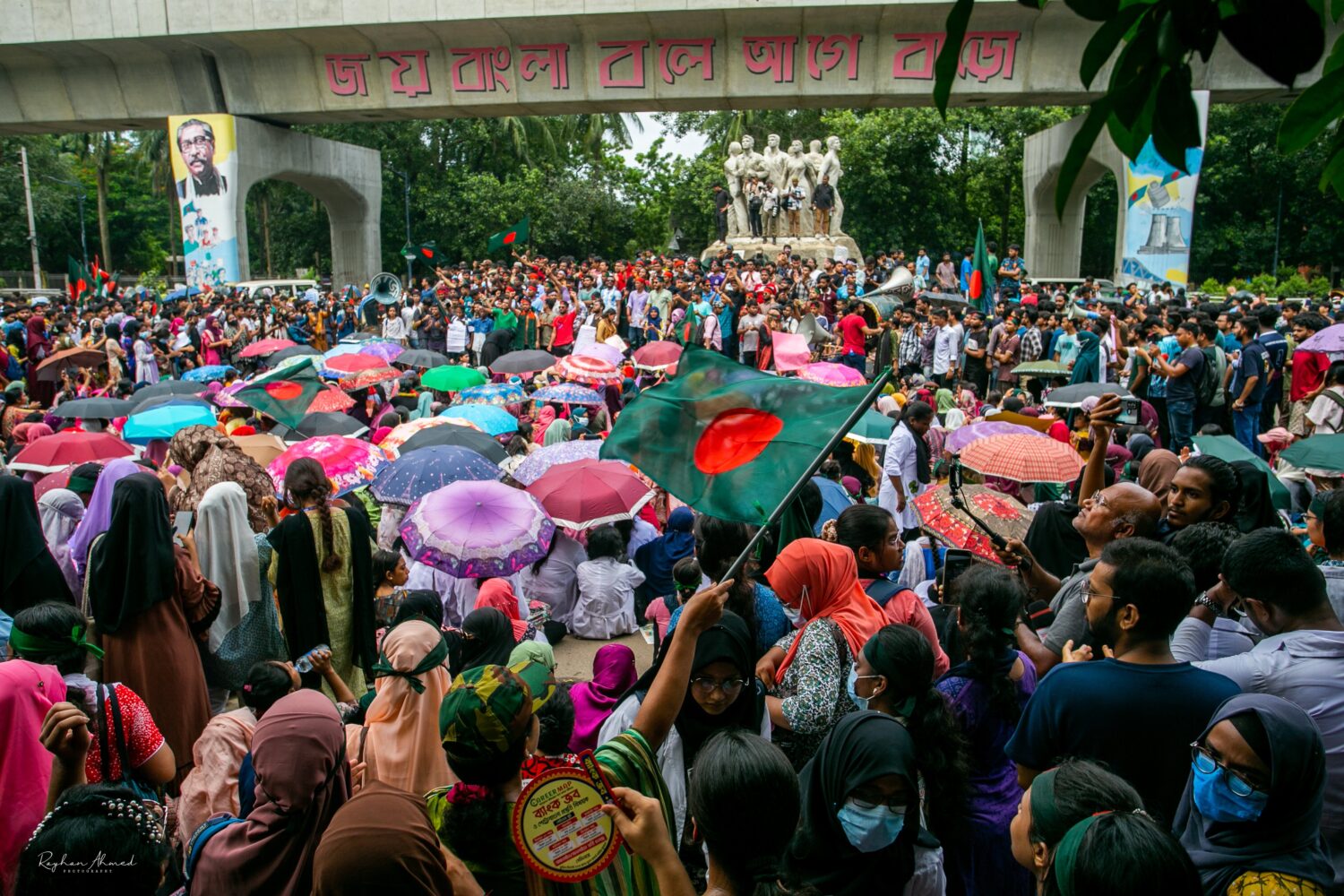
Confronting State Violence: Building Reparation Pathways for Survivors of Torture in Bangladesh
During the July–August 2024 uprising in Bangladesh, widespread and systematic human rights violations were committed against civilians. The government of Sheikh Hasina and allied groups were responsible for various human rights violations, including extrajudicial killings, enforced disappearances, arbitrary detention, torture, serious injuries, and sexual violence.
Despite the establishment of an interim government after the uprising in August 2024, survivors – including survivors of torture – continue to face significant legal, material, and institutional barriers in accessing justice and reparation. These obstacles include a politicised judiciary affected by corruption and intimidation against victims and witnesses. In addition, legal avenues remain unclear, proceedings are lengthy and costly, and compensation ceilings are typically low and inadequate to reflect the gravity of the torture suffered. Those obstacles prevent many survivors from engaging in legal or administrative proceedings for reparation.
Although the interim government introduced certain administrative reparation mechanisms to address the urgent needs of survivors, these measures fall far short of constituting comprehensive reparation programmes in line with international standards. For example, they have been criticised for their lack of transparency and clarity, as well as for the limited scope of services provided.
Therefore, survivors remain in a situation of vulnerability. While some forms of relief exist, legal uncertainty, insufficient protection for survivors and witnesses, and the absence of a comprehensive reparation framework leave many without meaningful redress.
REDRESS and the Bangladesh Legal Aid and Services Trust (BLAST) as part of the United Against Torture Consortium have prepared a briefing paper, “Exploring Avenues in Bangladesh for Reparation for Survivors of Torture”, which assesses the existing reparation mechanisms available to survivors of the July–August 2024 uprising in light of Bangladesh’s international obligations and sets out key recommendations to address the urgent need for comprehensive reparation. After recent elections in Bangladesh in February 2026, the new government has an opportunity ensure that the country’s legal framework for reparation is brought into line with international standards, and the briefing paper provides useful analysis and recommendations to support these efforts.
Among its recommendations, the briefing paper calls for the strengthening of existing accountability and justice mechanisms. This includes revising the current compensation ceilings and expanding reparation measures beyond financial compensation to encompass restitution, rehabilitation, and guarantees of non-repetition. Such measures should be adopted in line with the principle of non-discrimination and incorporate gender-sensitive and ethnicity-sensitive approaches. The State should also remove structural obstacles within the judicial process, including the application of immunities, establish a credible and effective witness protection programme, and implement the recommendations set out in the OHCHR (UN Office of the High Commissioner for Human Rights) Fact-Finding Report.
As part of broader institutional reform, the briefing paper recommends that Bangladesh should ensure the independence and integrity of both judicial and administrative mechanisms. This requires transparent and impartial procedures for the appointment and discipline of judges, as well as safeguards to protect them from political interference.
Finally, as a cross-cutting principle, Bangladesh must adopt a survivor-centred approach. Survivors should be able to participate meaningfully in the design and implementation of reparation mechanisms, and confidentiality and other protective measures must be guaranteed to ensure their safety and dignity.
Photo by: Rayhan9d CreativeCommons CC 4.0