
Fighting Torture in South Africa: Raising Awareness and Seeking Justice
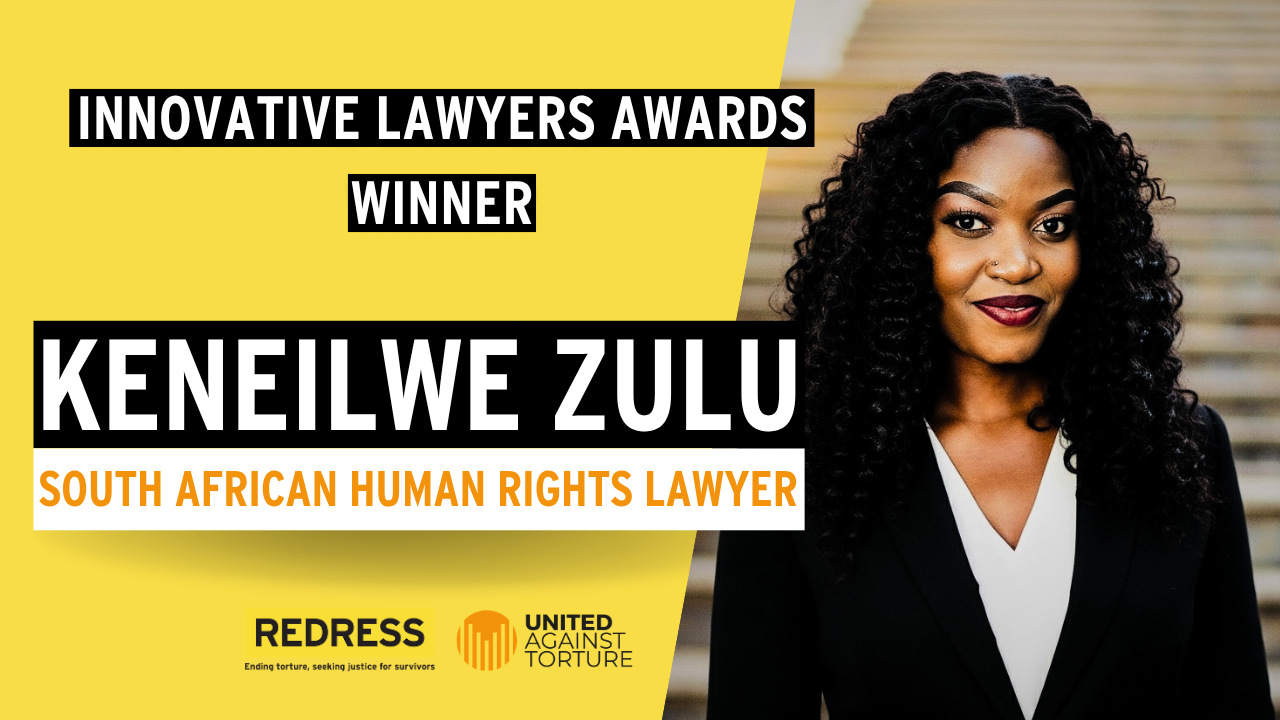
By Keneilwe Zulu, Innovative Lawyer Awardee
SUPPORT OUR FUNDRAISER FOR HUMAN RIGHTS LAWYERS
Keneilwe Zulu is a South African human rights lawyer and REDRESS Innovative Lawyers Award recipient. She serves as the Executive Director of Access Chapter 2, an organisation focused on promoting and protecting the rights of LGBTIQ+ people, women and girls. Through legal services and health support, the organisation works to combat inequality, gender-based violence, and discrimination.
In this blog, Keneilwe explores the often-overlooked issue of torture in South Africa, where abuse frequently goes unrecognised and unreported due to stigma, disbelief and misunderstanding. She reflects on the ongoing efforts to raise awareness through community workshops, training officials, collaboration with civil society, and creation of safe reporting channels, all aimed at empowering survivors to identify abuse, understand their rights, and seek justice.
Torture remains a hidden reality in many South African communities. While international law clearly defines torture, many survivors do not recognise it, or fear escalating complaints due to stigma, disbelief, or secondary victimisation. Over the years, my work has focused on supporting survivors, raising awareness, and advocating for justice. In this blog, I share insights from this work, the challenges faced, and why educating communities about torture is essential in South Africa.
Understanding Torture in South Africa
Many people in South Africa experience or witness acts that meet the definition of torture, yet awareness is low. Torture can take many forms, physical, psychological, or structural, and often happens in detention, policing, or other settings where individuals are vulnerable to abuse. Survivors may be threatened, beaten, humiliated, or subjected to prolonged neglect.
A key challenge is that some forms of torture are misunderstood, minimised, or denied altogether. Survivors may be told they are “overreacting” or “exaggerating,” and community members may dismiss abuse as routine disciplinary measures. This lack of recognition, combined with secondary victimisation, not only silences survivors but also enables perpetrators to act with impunity.
Raising Awareness and Encouraging Reporting
Raising awareness about torture is a critical part of our work, and we approach it through multiple strategies tailored to South African communities.
- Community workshops: We organise sessions in townships and rural areas where survivors and community members learn to identify acts of torture and understand their rights. Role-play and case studies are used to demonstrate how abuse may appear in everyday situations.
- Training law enforcement and local officials: Police officers, social workers, and local authorities often handle cases without fully understanding the legal definition of torture. We conduct training to help them identify abuse, respond appropriately, and avoid secondary victimisation.
- Collaboration with civil society: Partnering with local NGOs and human rights organisations allows us to reach broader audiences and provide guidance on reporting procedures and accessing legal support.
- Media and communication campaigns: We use radio broadcasts, social media, and community newsletters to explain what torture is, how to report it, and where survivors can seek help. Stories are shared anonymously to protect confidentiality while raising public awareness.
- Helplines and reporting channels: Establishing safe and accessible reporting options, including phone lines and local contact points, encourages survivors to come forward without fear of retaliation.
By combining these strategies, we ensure that awareness is not only raised but also translated into concrete action, helping survivors recognise abuse and navigate the system to access justice.
Legal Advocacy and Strategic Action
Providing legal support is another critical part of the work. Many survivors need guidance to navigate bureaucratic hurdles, file complaints, and claim compensation and other forms of redress. Strategic litigation also plays a key role, as cases are selected to address systemic failures, promote accountability, and improve protections for communities.
In South Africa, legal awareness about torture is often limited. Advocacy involves explaining both national and international frameworks, such as the Constitution, which protects human dignity and prohibits torture, and helping survivors understand their rights. Empowering people to use these frameworks strengthens both individual cases and broader societal understanding of human rights.
Training Government and Community Stakeholders
Education and capacity-building among Government officials and community leaders are essential. Misunderstanding or ignorance about torture can lead to improper handling of complaints, further secondary victimisation, or failure to prosecute offenders. Context-specific training ensures that authorities and community members can respond appropriately and effectively.
Collaboration with State departments, law enforcement, and local organisations is critical. These partnerships help establish clear reporting and investigation procedures, making interventions more sustainable and meaningful for survivors.
Challenges on the Ground
Despite progress, challenges persist. Survivors may be reluctant to report abuse due to fear, stigma, or secondary victimisation. Cultural norms and mistrust of authorities often complicate advocacy. Bureaucratic delays, limited resources, and corruption within some institutions can further undermine justice.
Addressing these challenges requires persistence, community engagement, and sustained advocacy. Ensuring survivors are supported and perpetrators are held accountable, is central to creating meaningful change.
Conclusion
Torture in South Africa is often invisible, misunderstood, or dismissed. Raising awareness, supporting survivors, and pursuing justice are essential to break this cycle. By combining community workshops, training officials, media outreach, and accessible reporting channels, we can help survivors recognise abuse and seek justice. These efforts not only provide immediate support to survivors but also strengthen communities by fostering understanding, empathy, and accountability.
Every effort, no matter how small, contributes to a South Africa where human dignity is respected and abuse is no longer tolerated. Holding perpetrators accountable, challenging harmful practices, and creating safe spaces for survivors sends a clear message that torture will not be ignored or normalised.
The fight against torture is ongoing, and it requires the commitment of communities, legal practitioners, advocates, and institutions alike. By working together educating, documenting, and supporting survivors, we can build a society where human rights are not just enshrined in law but practised every day, where survivors feel heard and empowered, and where future generations grow up in a culture that rejects abuse in all its forms.
About the Innovative Lawyers Awards
REDRESS’s Innovative Lawyers Awards recognise the vital work of new and emerging anti-torture champions, expose them to a broader peer support network, provide financial support to pursue public interest litigation and to inspire other lawyers and practitioners. This support is made available through the United Against Torture Consortium, which is funded by the European Union. The contents of the Innovative Lawyers Awards blog series are the sole responsibility of the authors and do not necessarily reflect the views of the European Union or REDRESS.