
“I Have No Words to Express My Joy”— Survivors of the 2007/08 Post-Election Violence Receive Compensation from the Kenyan Government
By Alejandro Rodríguez, REDRESS’ Legal Officer
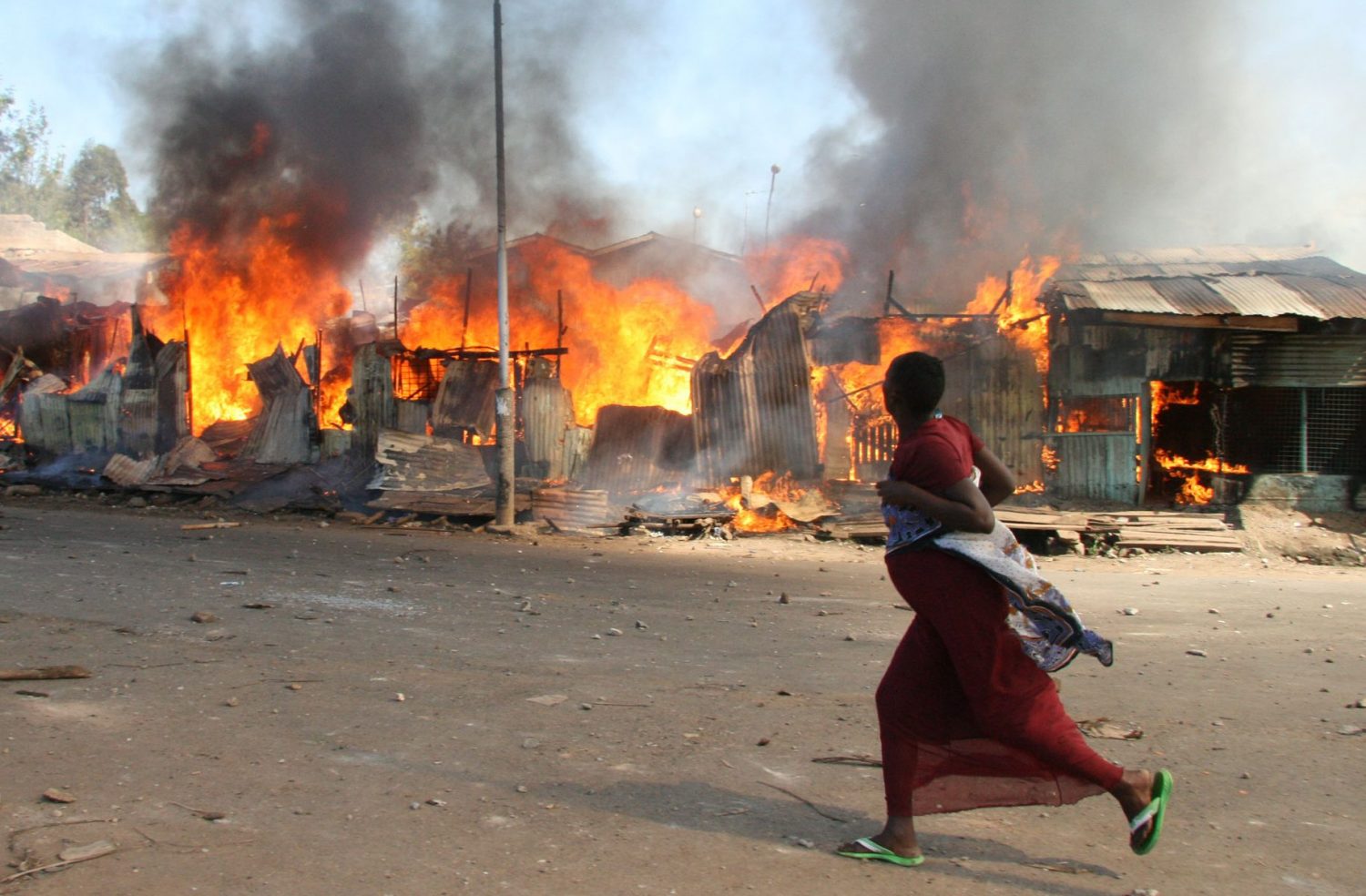
Following the announcement of election results in Kenya on 30 December 2007, widespread violence erupted across the country over the following three months. Both women and men suffered various forms of sexual and gender-based violence, including rape, defilement, gang rape, sodomy, forced circumcision and genital amputation. Perpetrators included members of the Kenya Police Service, Administrative Police, other state security agents, as well as non-state actors.
In a historic move, nearly two decades after these events, the Kenyan government paid compensation to survivors of the post-election sexual violence for the first time on 18 July 2025. A total of KSh16 million in compensation was paid to four of the eight survivors of sexual violence after a lengthy legal battle spanning 13 years.
The case, officially called Petition 122/2013, was filed in 2013 in Kenya’s High Court, which delivered a landmark judgement awarding reparation to four survivors in December 2020. This historic step for survivors of sexual violence in Kenya is the result of years of tireless work by the survivors and civil society organisations that have supported the survivors through strategic litigation and sustained advocacy.
“I am so happy. God heard us. All the noise we made about this finally bore fruit. I have no words to express my joy,” said one of the survivors.
The Court awarded compensation to four survivors, three of whose perpetrators were public officials. The other four survivors, whose perpetrators were private individuals and whose cases were not reported to the authorities, were excluded from the compensation award.
The petitioners have partially appealed the decision, arguing that the four excluded survivors are also entitled to reparation in accordance with international human rights standards. Although the delivery of the appeal judgment was initially scheduled for April 2025, the Court has delayed its decision without providing any justification.
The case was brought by the Coalition on Violence Against Women (COVAW), the Independent Medico-Legal Unit (IMLU), the Kenyan Section of the International Commission of Jurists (ICJ), and Physicians for Human Rights (PHR).
Throughout the litigation, several organisations, including survivors’ groups and international partners, supported their efforts, including Utu Wetu Trust, Grace Agenda, the CSOs Network, the Survivors Network, and Wanjiku Kanja, among others. REDRESS submitted a third-party intervention, outlining the international legal framework and relevant international and regional jurisprudence concerning States’ obligations to provide reparation to survivors of sexual violence.
The coalition of organisations, with REDRESS and the survivors’ representatives, developed an implementation plan of the 2020 judgment that combined advocacy efforts, communication campaigns, social mobilisation, and legal actions to promote the effective delivery of the compensation.
“I am thankful to God. I now know that my child will go to school because of this money and I can hopefully access treatment easily,” said another survivor.
While the payment of compensation marks a significant step forward for the rights of survivors of sexual violence, the accrued interest since the 2020 judgment remains unpaid. The Kenyan government must also ensure that the survivors receive the full amount awarded without any deductions and take all necessary measures to guarantee their safety, including protection from any form of backlash.
In a public statement, civil society organisations who had supported the survivors, including REDRESS, celebrated the implementation of the judgment and called on the Kenyan government, “to mark this as the beginning of sustained action to fulfil state obligations to prevent and ensure accountability and justice for conflict-related sexual violence, including through the adoption of a reparations policy and operationalization of the Restorative Justice Fund, implementation of the Victim Protection Act, and payment of compensation to survivors of torture and sexual violence from other regions and time periods in Kenya”.
Photo credit: UN OCHA