
Magdulein Abaida’s Case: Protecting Women Human Rights Defenders in the MENA Region
By Magdulein Abaida, human rights defender, and Renata Politi, REDRESS Senior Legal Advisor
This blog is part of a series featuring cases from Casebook 2, reflecting on the impact of strategic litigation against torture.
In Magdulein Abaida v Libya, the UN Committee on the Elimination of Discrimination against Women (CEDAW) — the body of experts that monitors implementation of the main global treaty on women’s rights — found Libya responsible for the torture of a Libyan women’s human rights defender. The 2021 decision was its first ruling on gender-based violence against a human rights defender and the first individual complaint it considered from the Middle East and North Africa region. Five years on, Libya has yet to implement the Committee’s orders. We revisit the case from two perspectives: Magdulein Abaida’s experience as the human rights defender who brought it, and Renata Politi’s legal perspective as a REDRESS Senior Legal Advisor.
“It’s such a huge relief to have received this type of recognition of the injustices I suffered in 2012. Though I’ve not yet digested it, it should finally offer some hope of closure, after so many years,”
said Magdulein Abaida, reacting to the 2021 decision.
For Abaida, the decision marked a long-awaited recognition of the injustices she had suffered nearly a decade earlier. A Libyan women’s human rights defender, she was arrested, beaten, and threatened with death for daring to campaign for women’s equality in the new Libya that emerged after Muammar Gaddafi’s fall. Her case would become a landmark decision on gender-based torture. But the recognition has not yet brought closure: Years later, she is still waiting for Libya to deliver the justice the UN ordered.
A Voice for Women’s Rights
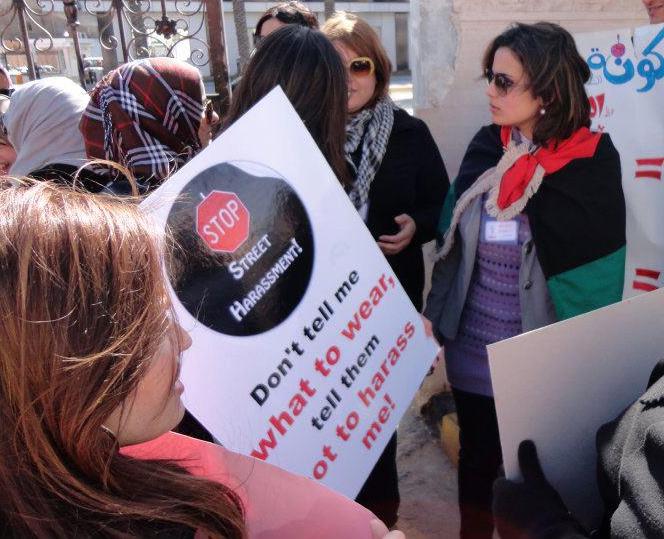
After the 2011 revolution, Abaida threw herself into building a fairer Libya. She campaigned for equality to be enshrined in the country’s new Constitution, helped organise the “Anger Day of Libyan Women” demonstration in Tripoli, and spoke openly on Libyan television about the human rights situation in her country. In May 2012, she founded her own organisation, Hakki (“My Right”), to champion women’s rights.
That visibility made her a target.
During two trips to Benghazi in the summer of 2012, Abaida was detained and interrogated by security forces and an armed militia group linked to the Libyan Government. On her second trip, in August, armed men believed to belong to a militia group stormed a women’s rights workshop she was attending and took her into custody.
Over the following days, she was moved between compounds, accused of being an Israeli spy because of a professional contact with a Jewish colleague, threatened with death at gunpoint, beaten, subjected to verbal sexual abuse, and accused of running a “prostitution organisation”— such questioning and accusations had nothing to do with any crime, and everything to do with silencing a woman who spoke up for other women.
Even after her release, Abaida continued to be harassed. She found herself the subject of hate mail, death threats, and social media posts branding her a traitor. Unable to continue her work and fearing for her life, she fled Libya in September 2012.
Seeking Justice
In 2013, represented by REDRESS, Abaida asked the Libyan Prosecutor to investigate what had happened to her. No investigation ever followed. With domestic avenues exhausted, she took her case to CEDAW, arguing that Libya had discriminated against her, tortured her, and failed in its duty to protect a woman defending other women’s rights.
On 7 April 2021, CEDAW agreed. In a decision REDRESS helped bring before the Committee, it found that Libya had violated her rights by failing to investigate, prosecute or provide redress for her arbitrary arrest and torture, and by discriminating against her because of her sex and her work as a women’s human rights defender.
Two findings stand out. First, CEDAW confirmed that assessing torture requires a gender-sensitive lens: pain and suffering must be understood in light of women’s experiences, and abuse that is gender-specific or sex-based can meet the legal threshold for torture in its own right. Applying that approach, the Committee found that the violence inflicted on Abaida amounted to torture.
Second, CEDAW recognised that she had been targeted precisely because she was a human rights defender, and that Libya’s failure to protect her, combined with attempts to punish her activism, breached her right to freedom of association. It was a rare and important acknowledgment that defending women’s rights can itself put women at risk of violence and abuse.
CEDAW ordered Libya to launch a prompt and independent investigation, provide Abaida with adequate reparation, and overhaul its laws and practices to better protect women and women’s human rights defenders. These measures included strengthening anti-discrimination legislation and introducing mandatory training for police and judges on gender-based violence.
Implementation Barriers
More than five years after the decision, Libya has not carried out an investigation. No one has been held accountable. Abaida is yet to receive compensation, an apology or any official acknowledgement from the Government of what was done to her.
Civil society continue to alert UN bodies that Libya’s civic space continues to shrink, with human rights defenders and women’s rights advocates facing intimidation, arbitrary detention, physical assault, sexual violence, and other abuses. Women who speak out in public life continue to face a heightened risk of violence simply for doing so. Impunity has had a chilling effect on Libyan women activists, many of whom discontinued their work or felt forced to flee the country.
Why Abaida’s Case Still Matters
For Abaida, the CEDAW decision was never just about her own case. She says:
“For me, this decision mattered because it named what happened not as a private misfortune, but as violence intended to silence human rights defenders. Its message reaches beyond Libya: all human rights defenders across the world deserve protection, recognition and justice.”
That precedent now stands as a marker for other women across the Middle East and North Africa – and beyond – who have suffered similar abuse and been denied justice at home. It demonstrates that international law recognises gender-based violence against women human rights defenders as torture, and that States have a legal duty to respond.
Abaida’s case underscores the power of strategic litigation to challenge impunity, establish important legal precedents and centre survivors’ experiences in international human rights law. But five years on, as she continues to wait for Libya to implement the decision, her case also shows that legal victories must be followed by concrete action to ensure survivors receive the justice and reparation they are owed.
Photo by: Magdulein Abaida
The REDRESS Casebook series was produced with financial assistance from the European Union under the United Against Torture Consortium initiative. Its contents are the sole responsibility of REDRESS and do not necessarily reflect the views of the EU.
Other blogs in this Casebook series:
- Women of Atenco: The Fight Against Sexual Torture in Mexico Continues After Two Decades of Impunity by Centro Prodh
- REDRESS’s Casebook Highlights Strategic Cases Challenging Torture and Defending Dissent by Ana Cutts Dougherty, Legal Consultant and Renata Politi, Senior Legal Advisor
- Forced Virginity Testing Recognised as Torture: Landmark African Commission Ruling Against Egypt by By Alejandra Vicente, REDRESS Head of Law