
Molded by Violence: Re-education of Ukrainian Children
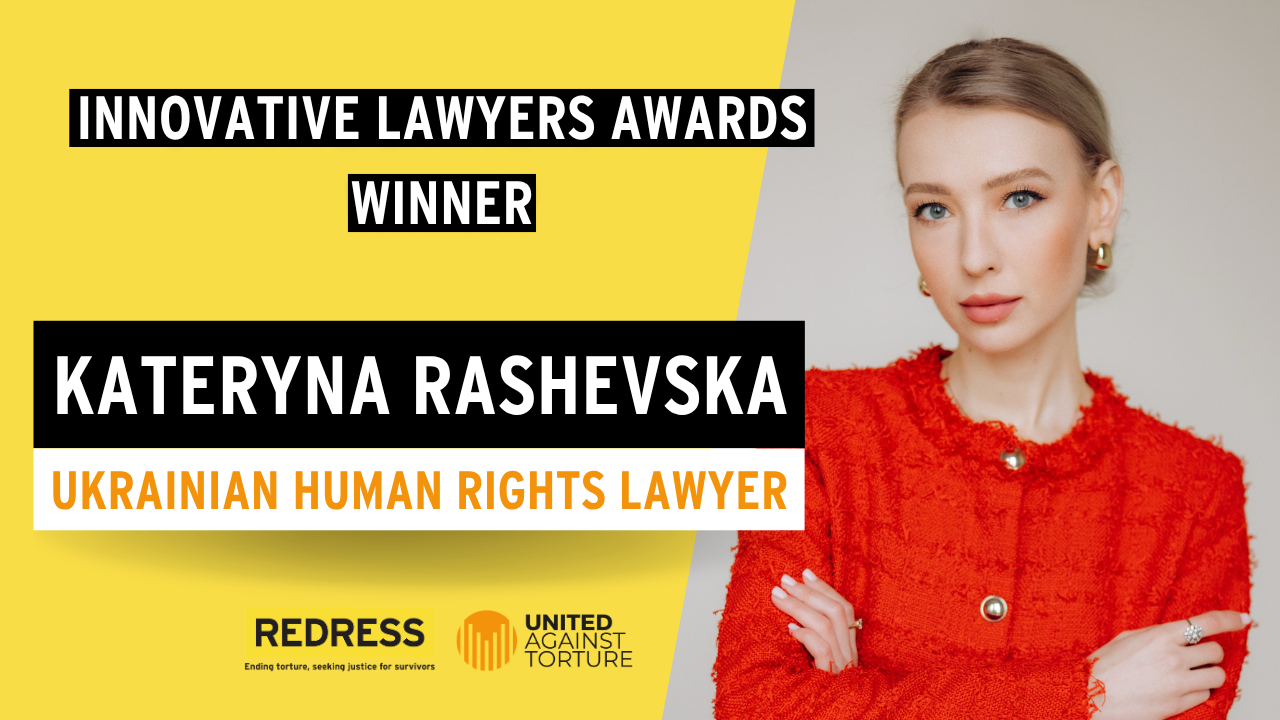
By Kateryna Rashevska, Innovative Lawyer Awardee
Kateryna Rashevska is a Ukrainian human rights lawyer and REDRESS Innovative Lawyers Award recipient. She serves as a Legal Expert for the Regional Centre for Human Rights in Kyiv, a Ukrainian NGO composed of lawyers and activists who document international crimes and defend human rights in occupied territories, particularly Crimea.
In this blog, Kateryna examines the ongoing grave violations committed against Ukrainian children under Russian occupation, including militarised “re-education,” cultural assimilation, forced displacement, and the recruitment of children into pro-war structures. She argues that international law and justice mechanisms have failed to adequately protect children in armed conflict, while calling for stronger legal recognition and accountability for the inhumane treatment and militarisation of Ukrainian children.
The yearly rise in grave violations against children in armed conflicts starkly shows that international mechanisms remain unable to protect one of the most vulnerable civilian groups. In Ukraine, each such violation is associated with a specific child. In my legal practice, it means a survivor of Russian atrocities whose interests I represent.
Since 2014, together with the Regional Center for Human Rights, I have been documenting torture, forcible displacement, adoption of Ukrainian children by Russian families, sexual violence, recruitment and use, as well as the militarisation of Ukrainian children. The evidence we collected, including testimonies from hundreds of survivors, contributed to the submissions to the International Criminal Court and the UN treaty bodies, the expansion of sanctions lists, as well as to the domestic investigations.
Over the past four years, we have achieved important interim successes in what often feels like a marathon for justice. Yet children continue to remain hostages of an international legal system accustomed to ex post responses and outdated understandings of international crimes, including inhumane treatment. Beyond the torture of teenagers from occupied territories, who Russian authorities prosecute for “terrorism” or “sabotage”, as well as sexual violence and the unjustifiable delay in the repatriation of tens of thousands of abducted children, militarised “re-education” causes severe mental suffering, though it is still not universally recognised as inhumane treatment.
Occupation as a Synonym for Fear and Unfreedom
“Children are like plasticine, adults can mould them into whatever they want,” says 17-year-old Artem from Donetsk. He was six when the occupation authorities proclaimed the so-called “Donetsk People’s Republic”, stripping him of his rights to safety, identity, freedom of belief, education, and the use of his native language.
“Under occupation, I felt like a fish in an aquarium,” Artem recalls. “It was dangerous to be who I really was. Even though I was young, I understood that something was wrong. It couldn’t be that I had one Motherland, and then suddenly I had another.”
Artem was fortunate to have his father living in Ukrainian-controlled territory. Before the full-scale invasion, he often travelled to Kyiv. This gave him the ability to resist propaganda about Ukrainian “Nazis”, a “junta”, and NATO biolabs because he had his own experiences and access to the truth. Today, however, as Russia completes the expropriation of the information environment and closes the window to a free Internet, around 1.6 million Ukrainian children living under occupation are deprived of that opportunity.
These children face cultural assimilation, as noted by the UN Committee on Economic, Social and Cultural Rights. They are being raised as enemies of their own nation. They are taught distorted values in which the interests of Russia are placed above the rule of law, patriotism above humanity, and “security” above human rights. Children are told that not only expressing disloyalty to the occupying State, but even feeling it, is a psychological disorder, sometimes leading to forced medical treatment.
Occupation becomes synonymous with fear and unfreedom. As 15-year-old Sofiia from the occupied Zaporizhzhia region says, “All you can do is stay silent. For now, at least, they don’t punish you for that.”
Children as a Mobilisation Resource
Ironically, the prohibition of war propaganda in the International Covenant on Civil and Political Rights has long been overlooked. Meanwhile, right under the nose of the international community, Russia has built a system to prepare soldiers from children on an industrial scale.
The legitimisation of aggression begins in kindergartens and accompanies children all the way to military service, which the occupying State imposes on Ukrainian children together with Russian citizenship. The military-patriotic organisation “Yunarmiya” already counts more than 44,000 members from the occupied territories. The “Warrior” Centre has provided basic military training to several thousand Ukrainian children, including at the ‘Avangard’ camp in Russia’s Volgograd region.
“I did not want to fight against Ukraine. It is my nation,” Artem told me. “But in Donetsk, they [the Russians] do not care about what you want. Eighteen-year-old boys disappeared straight from universities. No one ever saw them again. They want to destroy all of us and move further.”
“Move further” may well reflect Russia’s plan with ongoing militarisation and politicisation of education despite recommendations from the UN Committee on the Rights of the Child. As Vladimir Putin once said, “Russia’s borders do not end anywhere.” In contrast, the personal boundaries of children living under Russia’s control do not exist.
The Lost Connection Syndrome
Researchers at the National Academy of Sciences of Ukraine have established that militarisation, suppression of national dignity, eradication of a sense of belonging, and devaluation of the native language sever a child’s physical and mental connection to their native culture, homeland, community, and family. These deliberate actions, implemented as part of the aggressor State’s policies, have a specific destructive impact on the health of affected children, a phenomenon we term the “Lost Connection Syndrome”.
A similar pattern was observed in children taken from the families of Indigenous peoples in Canada during the 19th and 20th centuries. They were subjected to various forms of abuse and mistreatment and forbidden to use their language and practice their culture. A 2010 study identified the intergenerational consequences of residential school abuse as the loss of meaning, family, childhood, and emotional grounding. These losses, affecting the mental, emotional, physical, and spiritual well-being of children, have reverberated across generations and continue to impact the community today. In 2015, the Truth and Reconciliation Commission of Canada formally described the residential school system as an act of cultural genocide.
Rethinking international law
International law is always one war behind. Just like the fight against Russia’s aggression, the struggle for justice is a long-distance race. In these circumstances, “change or die” is not a slogan, it is a strategy for survival.
Child soldiers are not only those who are used in hostilities; but also those being raised in war and for war. The international community must firmly condemn Russia’s policy and support efforts to hold those responsible for the inhumane treatment of children to account.
Just as arrest warrants against Vladimir Putin and Maria Lvova-Belova contributed to slowing the pace of forcible displacement and accelerating the return of abducted children, new decisions from the ICC could exert a cooling effect on militarised re-education.
A loaded weapon will inevitably fire. Radicalised children may grow into adults ready to wage a new aggressive war, potentially preventing us from ever reaching the finish line of the marathon for justice.
About the Innovative Lawyers Awards
REDRESS’s Innovative Lawyers Awards recognise the vital work of new and emerging anti-torture champions, expose them to a broader peer support network, provide financial support to pursue public interest litigation and to inspire other lawyers and practitioners. This support is made available through the United Against Torture Consortium, which is funded by the European Union. The contents of the Innovative Lawyers Awards blog series are the sole responsibility of the authors and do not necessarily reflect the views of the European Union or REDRESS.