
Q&A: Unlocking the Frozen Chelsea Funds for Survivors of the War in Ukraine
Last update: 9 October 2026
Back in May 2022, Russian oligarch Roman Abramovich sold Chelsea Football Club (Chelsea FC) to a consortium of investors in a deal worth up to £4.25 billion. The deal consisted of:
- the £2.5 billion purchase of shares in Chelsea FC from Fordstam Ltd (Fordstam), a UK-registered holding company through which Abramovich ultimately owned the club; and
- a £1.75 billion pledge by the new owners for future investment in Chelsea FC.
Following the sale, Fordstam received £2.35 billion into its Barclays bank account in the UK. To allow the sale to take place, Abramovich committed the sale proceeds to a charitable foundation to benefit victims of the war in Ukraine. Four years later, the money remains frozen due to UK sanctions law and a lack of consensus between Abramovich and the UK Government (the Government) about how exactly it will be spent. In this time, the funds have already accrued at least £175 million in interest. The latest interest figure is thought to be around £200 million.
When we refer to the Chelsea funds, we mean both the £2.35 billion in sale proceeds and the interest that this money continues to generate.
REDRESS provided an advanced draft of this Q&A to Abramovich’s legal representatives for comment. His representatives responded by letter on 7 October 2026. Key extracts from this response are referenced throughout the Q&A.
Fordstam has received £2.35 billion of the full £2.5 billion share purchase amount. The remaining £150 million has been held back by the new owners until May 2027 to cover any liabilities relating to conduct during Abramovich’s tenure of ownership. For financial reporting purposes, Fordstam does not expect to receive any of this holdback amount.
An additional £41.6 million was spent on transaction fees.
After Russia’s full-scale invasion of Ukraine, scrutiny quickly intensified on Putin-linked oligarchs with connections to the UK. Around this time, Abramovich issued a statement announcing that he would sell Chelsea FC. At the time, he said that he had:
“instructed my team to set up a charitable foundation where all net proceeds from the sale will be donated. The foundation will be for the benefit of all victims of the war in Ukraine. This includes providing critical funds towards the urgent and immediate needs of victims, as well as supporting the long-term work of recovery.”
The following week, the UK sanctioned Abramovich under its Russia Sanctions programme. The Russia Sanctions programme is intended to put pressure on Russia to end its war in Ukraine, during which it is widely accepted that large-scale violations of international human rights law and international humanitarian law have been committed. Based on his entry on the UK Sanctions List, Abramovich was designated primarily because of his association with Putin and for obtaining a benefit from or supporting Russia (through his ownership stakes in various Russia-linked companies). Alongside a travel ban to the UK, the sanctions designation imposed an asset freeze on Abramovich. This means that, unless an appropriate licence is granted, anyone subject to UK jurisdiction is prohibited from dealing with assets which are owned or controlled by Abramovich – including Fordstam and, prior to its sale, Chelsea FC. The asset freeze also prohibits making funds or other assets available to Abramovich, directly or indirectly.
As Chelsea FC was owned by Abramovich through UK-registered Fordstam, the asset freeze would have effectively stopped the club from operating. To allow the club to operate in the short term, the UK’s Office of Financial Sanctions Implementation (OFSI) – responsible for financial sanctions implementation and enforcement in the UK – issued a licence permitting it to run various football-related activities. The Government acknowledged that this was:
“not a long-term solution and the Government has always been clear that [Chelsea FC] should be sold before the end of the football season to secure its long term future. Of course, this was conditional on our assurance that there could be no benefit to any sanctioned individual.”
Negotiations soon took place for the sale of the club, which, because of the asset freeze, required approval from the Government. Once Chelsea FC identified their preferred owner and agreed the conditions of the sale, they successfully applied to OFSI for a licence to transfer ownership.
Two days after the granting of the licence, Nadine Dorries, the then-Secretary of State for Digital, Culture, Media and Sport, made a written statement to Parliament which included the following wording:
“We have agreed a Deed of Undertaking in which [Abramovich] commits the proceeds to a charity in a jurisdiction agreed by the Government for the purposes of helping victims of the war in Ukraine.”
However, in their response to REDRESS, representatives for Abramovich described Dorries’ statement as “factually inaccurate” and giving a “misleading impression”. Abramovich’s representatives state that while the terms of the Deed of Undertaking were “seen and approved” by the Government, the only parties to the Deed were Abramovich and Fordstam (which is wholly owned by Abramovich).
The sale of Chelsea FC took place on 30 May 2022, and the net proceeds were transferred to a frozen UK bank account in Fordstam’s name, where they remain over four years later.
As the situation stands, the Chelsea funds are stuck in limbo. The money, while frozen, still belongs to Abramovich through his ownership of Fordstam. Sanctions alone do not provide a lawful basis on which to confiscate frozen funds, nor to compel the owner to spend these funds in a certain way. Unless the Government identifies an appropriate legal basis, it can only grant a licence permitting Abramovich to use the funds according to its terms. Meanwhile, Abramovich cannot lawfully use the funds unless either his sanctions designation is lifted or he uses the funds in accordance with a licence.
Abramovich and the Government are yet to arrive at a consensus regarding the terms under which he will voluntarily donate the Chelsea funds. This mainly stems from a disagreement about how the funds will ultimately be spent. With protracted negotiations having seemingly stalled, in December 2025, OFSI unilaterally issued a licence permitting the transfer of the Chelsea funds into a new charitable foundation. While the terms of the licence are not public, the UK Foreign Secretary has confirmed that it would permit the proceeds to:
“go to humanitarian causes in Ukraine while any future gains can be spent more broadly on victims of conflict worldwide. In neither case can the funds benefit Abramovich or other sanctioned individuals.”
At the same time, the Government issued renewed calls that, should Abramovich not agree to free the Chelsea funds within 90 days, it would “take him to court if necessary to enforce the agreement reached with him in 2022.” The deadline has since passed, with Abramovich seemingly declining to donate the funds based on the terms of the OFSI licence. The Government’s legal representatives reportedly wrote to Abramovich’s legal team stating that they are preparing possible legal action, the basis of which has not been stated publicly.
In their response to REDRESS, Abramovich’s representatives told us that he:
“remains fully committed to making the Donation to a charitable foundation in accordance with the terms of the Deed. As matters currently stand, however, the Donation cannot proceed due to a number of legal and practical obstacles outside our client’s control. [The Government] is aware of this. Against that background, our client does not accept that there is any proper basis for the court proceedings that have been threatened by [the Government].”
The central public dispute between the parties is about how the Chelsea funds will be used and what Abramovich actually agreed to four years ago in the confidential Deed of Undertaking between Abramovich and Fordstam.
The Deed of Undertaking reportedly provides that the funds would be committed to a charitable foundation. While the exact terms for the donation are not known, it is widely accepted that they relate to humanitarian purposes and the war in Ukraine. The Government’s position is that the agreement was always for the funds to be used “for exclusively humanitarian purposes in Ukraine.” As a result, it will consider any proposal from Abramovich to donate the funds to the “most vulnerable in Ukraine”, and not to Russia or elsewhere. This position has remained consistent across multiple governments. For instance, the former Foreign Secretary, Lord Cameron, confirmed that the then-Government was firm that the funds should be spent specifically on humanitarian causes in Ukraine, “not on other causes linked to Ukraine or anything else”.
The Government also has an agreement with the European Union (EU) regarding the distribution of the funds. This is because Abramovich secured Portuguese citizenship before Russia’s full-scale invasion of Ukraine, and because Abramovich has also been sanctioned by the EU. Reportedly, Portugal signed off on the sale of Chelsea FC on the condition that the Chelsea funds were only spent in Ukraine itself.
In contrast, when he announced that he would sell Chelsea FC, Abramovich said that the sale proceeds would be used “for the benefit of all victims of the war in Ukraine” (emphasis added). Some figures linked to Abramovich have claimed that the documents of sale approved by the Government provide for the proceeds to benefit “all victims of the Ukraine war and its consequences” (emphasis added).
As the sale was being finalised, Chelsea FC nominated Mike Penrose, former Executive Director of Unicef UK, to lead a charitable foundation that would be entrusted with spending the Chelsea funds.
In an interview around this time, Penrose stated that he had personally requested the wording “all victims of the Ukraine war and its consequences”. According to Penrose, this is to ensure that the foundation can also support victims who are forcibly transferred or displaced outside of Ukraine, or suffering from the “indirect effect[s]” of the war (such as those affected by food insecurity due to reduced Ukrainian wheat exports).
However, given the lack of agreement across four years and successive governments, it appears that the Government has concerns with this approach. To date, the Government has provided limited policy rationale in public, focusing instead on its claim that Abramovich is failing to honour his commitment. Relevant considerations may potentially include:
- The importance of addressing the most urgent harms suffered by victims, allowing them to rebuild their livelihoods and preventing their harm from worsening and becoming irreparable. Many victims of Russia’s war in Ukraine with the most urgent needs, closest proximity to violations of international law, and whom can be feasibly and responsibly reached are based in Ukraine. However, the funding allocated to survivor-centred reparation currently pales in comparison to the needs of these victims. In REDRESS’ consultations, Ukrainian survivors have emphasised the time-sensitive need to provide direct victims of the war with interim relief addressing their immediate physical, psychological, and economic needs.
- Russia has led a well-documented campaign of forced ‘Russification’, especially in the territories that it illegally occupies. This is intended to suppress, if not erase, Ukrainian culture through various coercive means, including imposing the Russian curriculum and Russian propaganda in Ukrainian schools, as well as requiring Russian documentation (and effectively renouncing Ukrainian civic identity) to access healthcare and other basic services. The Government has already sanctioned numerous individuals and entities for their roles in what it describes as “the heinous policy of Russification of Ukrainian children”. The Government might therefore be concerned that channelling funds to support basic services in occupied territories would subsidise Russification and ultimately legitimise and strengthen the infrastructure of Russia’s coercion.
- Should it allow a portion of the Chelsea funds to go to Russia, the Government might be concerned about the perception of drawing a false moral equivalence between citizens of the aggressor Russian State who have been harmed and those in Ukraine suffering from Russia’s illegal invasion.
- Given that the Government has already sanctioned more than 3,400 individuals, companies, and ships under its Russia sanctions programme, it might also fear that permitting funds to be sent to Russia could undermine the integrity of its targeted sanctions regime. According to Penrose, it was proposed that the Government would have an observer within the foundation, who would be able to raise objections over projects that could contravene sanctions law.
A charitable foundation will be established and entrusted with spending the Chelsea funds. It is expected that the foundation will be led by Mike Penrose. Penrose reportedly first came into contact with Chelsea FC in 2019 while chairing Soccer Aid. He insists that he has never had direct contact with Abramovich, other than twice to sign documents, and that Abramovich would have no control over how the money is spent. According to Penrose:
“The only request I received was to use my experience and contacts to create a Foundation that would have the greatest impact on conflict affected people in Ukraine, and in other countries affected by conflict across the globe.” (emphasis added)
Penrose submitted a scoping document to the Government and OFSI granted an initial licence to facilitate the establishment of the foundation. Until recently, there had been very few public developments regarding the foundation. However, in April 2026, Penrose lodged an application to the Charity Commission to establish the foundation, despite an apparent lack of consensus between Abramovich and the Government on how the Chelsea funds will be used. The application, which is still pending, appears to be consistent with Abramovich’s position. Most notably, it reportedly lists the foundation’s charitable objects as being:
“for the public benefit, the saving of lives and relief of suffering through the provision of humanitarian assistance to people in need anywhere in the world who are victims of conflict, by the provision of grant financing (or other suitable support) to organisations able to provide relief, humanitarian assistance, post-conflict support and/or reconstruction.” (emphasis added)
According to public reports, “Penrose has long had legal undertakings in place with causes in mind.”
If established, the foundation’s trustees would reportedly include:
- Martin Griffiths (former Under-Secretary-General for Humanitarian Affairs and Emergency Relief Coordinator at the UN);
- Nimco Ali (co-founder of The Five Foundation); and
- Caryl Stern (former head of The Walton Family Foundation).
Penrose recently told The Financial Times that the Government had stopped a licence needed for him to legally receive his salary from the foundation. He said that as a result, he is now owed more than £10,000 in pay.
During his ownership of Chelsea FC, Abramovich is reported to have channelled his wealth to the club via a series of interest-free loans granted through a network of linked companies incorporated in the British Virgin Islands, Cyprus, and Jersey. In March 2026, Fordstam published its accounts for the year ending 30 June 2023, which reveal that Fordstam owes more than £1.4 billion in debt to another Abramovich-linked company, Camberley International Investments Limited (Camberley), which is based in Jersey.
The latest accounts state that Fordstam and Abramovich “intend to donate the net proceeds from the sale of [Chelsea FC] less any liabilities arising, to a charitable foundation” (emphasis added). Previously, Abramovich had stated on several occasions that “I will not be asking for any loans to be repaid.”
Right now, it is unclear what an eventual deal might look like. The lack of public developments indicates that the two might remain in a deadlock – with Abramovich still calling for the Chelsea funds to finance humanitarian aid for victims of conflict around the world, and the Government insisting that they are to be used for exclusively humanitarian purposes in Ukraine.
One related development may be the OFSI licence issued unilaterally in December 2025. Under the terms of the licence, the proceeds from the sale of Chelsea FC must go to humanitarian purposes, whereas any “future gains” can be spent more broadly on victims of conflict worldwide. However, when approached for comment, Abramovich’s representatives told us that “insofar as our client is concerned, the [licence] is legally invalid and ineffective, and has no bearing on the Donation.”
In April 2022, shortly after Abramovich was sanctioned by the UK and Jersey, Jersey’s Attorney General launched an investigation into potential sanctions breaches and money laundering offences that he may have committed. At the same time, Jersey’s Royal Court imposed a saisie judiciare (freezing order) over $7 billion of assets linked to Abramovich, and Jersey Police searched premises connected to his business activities.
No charges have been brought to date. Abramovich, through his lawyers, has denied any allegations of wrongdoing. Representatives of Abramovich told The Times: “This investigation, which has dragged on for years without charges, transparency or credible evidence, represents a clear abuse of power by the government of Jersey and a violation of fundamental rights.” Abramovich has filed an application against the UK before the European Court of Human Rights in respect of the Jersey investigation, which is described in more detail below.
According to a June 2025 judgment of the Jersey Court of Appeal:
(i) the sanctions breach allegations concern steps allegedly taken by Abramovich shortly before being sanctioned to restructure the ownership of various companies linked to him; and
(ii) The money laundering allegations relate to the source of Abramovich’s wealth. Years prior, Boris Berezovsky sued Abramovich, claiming (unsuccessfully) that he had an interest in two Russian companies, including Sibneft – an oil company which Abramovich bought for around $250 million, before later selling it back to State-owned Gazprom for approximately $13 billion. According to the judgment, the Attorney General is relying on “Alleged Admissions” he claims are contained in the Berezovsky judgment to the effect that, in the Attorney General’s view, Abramovich had acquired his ownership stake in Sibneft “as a result of corruption”. The Attorney General also alleges that the assets of Abramovich-linked companies in Jersey were substantially derived from the sale of Abramovich’s interest in Sibneft. On that basis, the Jersey authorities argue there are reasonable grounds for believing that the assets Abramovich brought to Jersey may be criminal property. Dealing with criminal property can be a criminal offence in both Jersey and the UK.
Lawyers for Abramovich disagree with this reasoning, stating that the judgment in the Berezovsky case “makes no finding that our client broke any law in respect of his business dealings and there was no suggestion in our client’s defence that his acquisition of the relevant entity was achieved through corruption. Any suggestion to the contrary is misleading, false and defamatory.”
Abramovich reportedly leveraged assets held in Jersey to provide interest-free loans to Fordstam, which are yet to be paid or written off. The Jersey investigation therefore introduces an additional layer of complexity as to when and how the Chelsea funds, which are held by Fordstam, might ultimately be used. If Abramovich’s Jersey assets are found by a court to be criminal property, this might conceivably provide a legal basis to confiscate a portion of the Chelsea funds. No such decision has been reached as of writing. It is also possible that the Chelsea funds may need to be held until the Jersey investigation is complete. Representatives for Abramovich claim that the ongoing investigation in Jersey is delaying the release of the Chelsea funds.
The investigation in Jersey has been remarkably storied, with Abramovich mounting numerous legal challenges against the Jersey authorities. Having exhausted domestic remedies in Jersey, Abramovich recently filed an application against the UK before the European Court of Human Rights, alleging that the investigation in Jersey breached his rights to a fair trial and to respect for private and family life. Previously, Abramovich had brought judicial review proceedings against the Jersey Attorney General’s decision to conduct the investigation, which were dismissed domestically. In November 2025, Abramovich was denied permission to appeal to the Privy Council.
In their letter dated 7 October 2026, Abramovich’s representatives provided the following comment concerning the Jersey investigation:
“The [investigation] has been ongoing for more than 4.5 years and does not appear to have meaningfully progressed by the Jersey authorities. All allegations of wrongdoing are denied by our client. His position is that the Jersey Attorney General’s decision to investigate him in 2022, very shortly after the commencement of the conflict in Ukraine on 24 February 2022, for alleged historic conduct said to have occurred in Russia in the 1990s and early 2000s, was undertaken for political purposes and to bolster Jersey’s reputation in the wake of the Russia-Ukraine conflict, at a time when the Government of Jersey’s previous approach of encouraging Russian wealth to move to the Island had become politically inconvenient. The [investigation] and the saisie judiciare are based on an erroneous interpretation of historic open-source material that has been readily easy to find on the internet since 2012, and would have been found with a simple Google search of our client during the period when our client was formally vetted by Jersey.
To gather evidence in connection with the [investigation], and in particular the extent to which it is being pursued for improper political purposes, in April 2023 our client submitted Data Subject Access Requests (the “DSARs”) to various departments of the Government of Jersey (the “GOJ”) and the States of Jersey Police (the “SOJP”). The DSARs required the GOJ and the SOJP to provide our client with his personal data, including for the period most relevant to his challenge to the [investigation]. Our client contends that neither the GOJ nor the SOJP has provided him with the personal data to which he is entitled under the DSARs.
Jersey’s Royal Court granted summary judgment against the GOJ, determining that it breached its statutory obligations to our client in respect of the DSARs. It also found that he has a prima facie case that (a) the GOJ has unlawfully conspired in bad faith to prevent him from obtaining his personal data, in order that he could not use it as evidence in his legal challenge to the [investigation], and (b) in so doing, the relevant Jersey Government Ministers have committed misfeasance in public office. The Royal Court has described the GOJ’s conduct of that litigation, which is ongoing, as “wholly unreasonable” and “out of the ordinary for any litigant let alone an “office holder””. The GOJ has on several occasions been ordered to pay our client’s costs, including on the indemnity basis, the highest available.
These are not the only instances of unreasonable and/or unlawful conduct in matters involving Jersey and our client. [In the Q&A, REDRESS refers to a search by the Jersey Police of premises connected to Abramovich’s business activities] […] Following a judicial review of the SOJP’s conduct, in proceedings to which our client was not a party, the SOJP admitted that they had conducted unlawful searches of premises alleged to be linked to our client, and agreed to pay damages to, and apologise to, the third-party entities involved.
The ongoing [investigation] represents a major barrier to our client’s ability to make the donation. In addition to this, there are a number of other legal and practical obstacles that our client continues to seek HMG’s assistance in resolving.”
While news headlines have focused on when and where the Chelsea funds may be spent, another key issue risks being overlooked: what support will be provided, and how will it be positioned to survivors? Since the funds were first frozen, REDRESS has called for at least a portion of the Chelsea funds to be earmarked as reparation for victims of Russia’s war.
Reparation means a series of measures designed to repair the harms that a victim has suffered (to the extent that this is possible). It has unique value to both victims and society at large, as a crucial component of Ukraine’s national recovery and an investment in its human capital. By funding reparation from the Chelsea funds, the Government can contribute to victims’ redress by formally recognising the violations that they have suffered, giving survivors a sense of justice and empowering them as rights-holders. Ukrainian survivors have repeatedly told REDRESS about the importance of reparation to bolstering victims’ capacity to heal and self-advocate, as well as to uphold their inherent human dignity.
Whilst there is no suggestion that Chelsea FC or Abramovich are directly responsible for the consequences of Russia’s war, the Chelsea funds are connected to Abramovich and therefore, according to the Government, the Kremlin. Accordingly, they represent a rare opportunity for the Government to support Ukrainian survivors’ fight for justice and reparation. Survivors consulted by REDRESS feel that there is a particularly strong case that a portion of the Chelsea funds and money gathered from other Russia-linked assets should be specifically used to fund reparation owed to victims. In particular, survivors have emphasised the responsibility of Russia and its enablers for the underlying violations and see that financing reparation measures through the repurposing of Russia-linked assets as a way of “making Russia pay”. In one survivor’s view, by exploring opportunities to repurpose Russia-linked assets for reparation, “justice for Ukraine has started already”.
Mechanisms exist that can or will soon be able to provide some forms of reparation to victims. While there is currently a massive funding gap, allocating a portion of the Chelsea funds to reparation could dramatically transform victims’ present and future.
Ukrainian Government programmes
The Ukrainian Government has committed to a range of administrative and reparations programmes supporting those affected by the war. A portion of the Chelsea funds could help finance the so-called Bardina Law programme, the pilot project of which has already delivered urgent interim reparations to over 1,000 survivors of conflict-related sexual violence during an active war. While a law has been enacted formally establishing the programme, implementation challenges remain, with lack of sustainable funding being a major driver. Funding from the Chelsea funds could also support the Ukrainian authorities to expand the Bardina Law model to address the urgent needs of other victims, including survivors of torture and ill-treatment, arbitrary detention, enforced disappearance, and the forced transfer of children.
International Claims Commission
Some of the Chelsea funds could be allocated to the Register of Damage and International Claims Commission for Ukraine. Established within the framework of the Council of Europe, these bodies are responsible for recording and examining claims submitted by individuals, companies, and the Ukrainian state for compensation for the damage, loss, and injury inflicted by Russia’s aggression against Ukraine.
The Claims Commission will need clearly demarcated and stable financing. It will also require a trust fund body to disburse payments to individual victims. While there is an expectation that the Claims Commission will be at least partially financed from Russia-linked assets, this has not been confirmed. The Register of Damage previously announced that over half a billion Euros will be required to satisfy the first 10,000 claims for damage or destruction of residential housing.
ICC Trust Fund for Victims
The Trust Fund for Victims of the International Criminal Court could also receive a portion of the Chelsea funds for the benefit of victims. Alongside its reparations mandate (which is engaged when a person has been convicted by the court), the Trust Fund may undertake independent projects to complement reparations. The Trust Fund has already expressed an intention to provide programmes for the benefit of victims in Ukraine, which could be put in place urgently.
The Trust Fund has some limited funds but requires significant additional funding to reach those most in need. By complementing the above mechanisms, the Trust Fund can provide an essential lifeline to victims (for instance, by addressing harms caused prior to the full-scale invasion, which are not currently within the scope of the Register of Damage and Claims Commission).
Learn more: REDRESS has developed a series of guidelines to assist competent authorities, like the UK Government, to repurpose the Chelsea funds and other Russia-linked assets to finance reparation for victims of the war in Ukraine. The guidelines provide significant additional detail on the key pathways for financing reparation and expected implementation challenges.
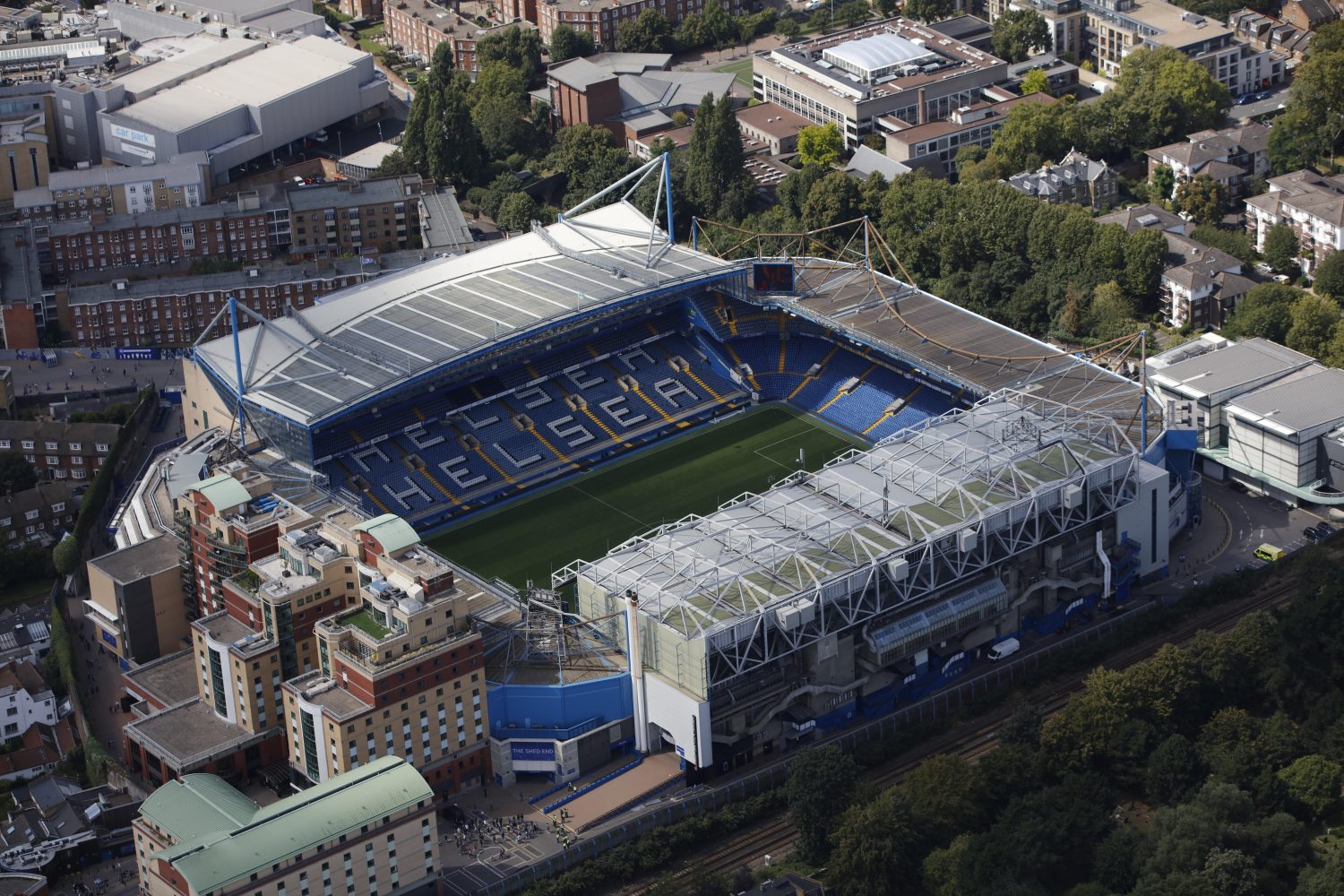
Photo: CC via Wikimedia Commons