
Survivors of Bangladesh’s 2024 Protests Are Seeking More Than Compensation
by: Alvi Hakim, Bangladesh Legal Aid Services Trust (BLAST)
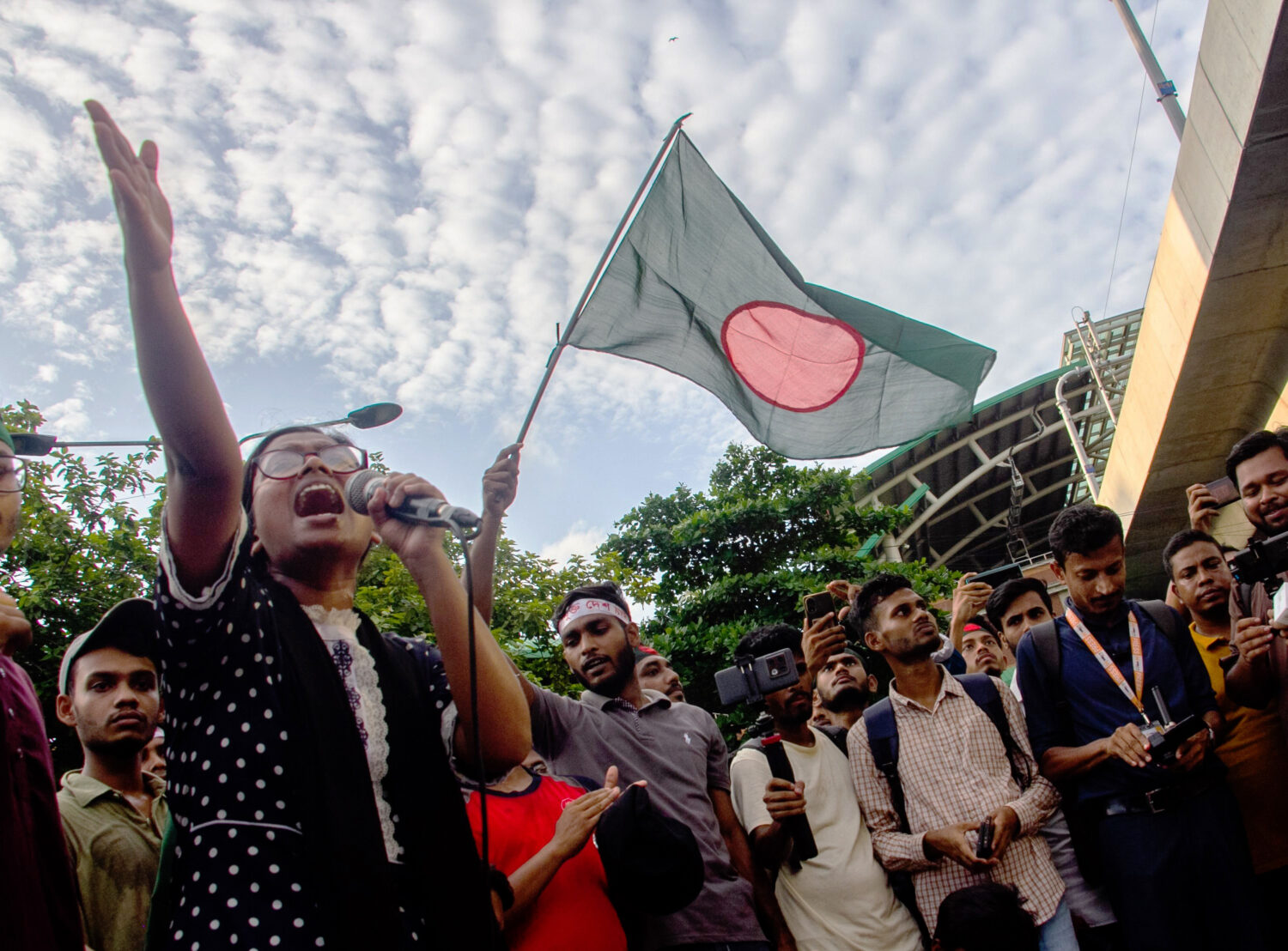
The July–August 2024 uprising in Bangladesh was a period of extreme violence marked by grave human rights violations against protesters and other civilians. According to the United Nations Fact-Finding Mission, more than 1,400 people were killed and over 11,700 were arbitrarily detained. Many others were subjected to torture, suffered serious injuries, experienced sexual violence, and endured additional forms of abuse. Nearly two years on, survivors continue to be denied justice and reparations.
In this context, REDRESS and Bangladesh Legal Aid and Services Trust (BLAST) have prepared a briefing paper reflecting survivors’ perspectives on access to justice, accountability, and reparations through domestic mechanisms in Bangladesh. The information underpinning this briefing was collected by BLAST through a documentation process involving victims of the July–August 2024 violence, the majority of whom sustained injuries from shotgun fire.
What Are the Survivors’ Priorities?
The briefing paper highlights survivors’ priorities and intentions in seeking justice. It demonstrates that survivors are not concerned solely with compensation or urgent financial assistance. Rather, there is a widespread and urgent need for comprehensive forms of reparation. Many survivors expressed a strong desire, central to their understanding of reparation, to access employment opportunities, receive holistic rehabilitation, pursue education, and benefit from meaningful satisfaction measures.
The paper also reinforces a key finding from the first REDRESS–BLAST briefing paper, existing administrative schemes were not designed as comprehensive reparation programmes and are therefore incapable of addressing the full scope of harm survivors continue to experience. Current justice and reparation avenues fall short of international human rights standards.
BLAST’s research illustrates with stark clarity why comprehensive and transformative reparations matter, beginning inside survivors’ own homes. Parvin, a 27-year-old garment worker from Dhaka, was caught in police violence while returning home from work. Six shotgun pellets destroyed her cornea. Following documentation of her case, urgent support was mobilised: a donor cornea was flown from Sri Lanka and surgery was performed. However, the damage proved irreversible, and Parvin permanently lost vision in both eyes. During an interview, she showed photographs of herself prior to the injury and said: “Look, I used to look so pretty … I am no longer pretty. I do not know how long he [her husband] will keep me.” Her story illustrates how state violence can intersect with domestic abuse, economic dependency, and gendered insecurity within the home.
In Chattogram, BLAST met Armaan, a teenage boy who sustained severe gunshot injuries to his lower body, leaving him permanently immobile and dependent on assistance for movement. His mother was already caring for another child with significant learning disabilities. When she approached BLAST, her request was not medical treatment, but help securing Armaan’s birth certificate so he could access state financial assistance—something her husband was deliberately obstructing out of spite. Her experience underscores that the harm suffered by survivors is not only physical, but also administrative, and that its burden often falls disproportionately on caregivers.
Across these and many other cases, the briefing paper concludes that survivors are not seeking charity. Their central demand is the opportunity to work again and to regain financial autonomy, dignity, and social independence.
What Are We Calling for?
The briefing paper sets out detailed recommendations for establishing a survivor-centred reparation scheme. These include ensuring meaningful consultation with survivors and systematic assessments of their needs and priorities in both the design and implementation of reparation mechanisms. The recommendations also emphasise the importance of providing clear, accessible information about available avenues for reparation and ensuring survivors receive effective support throughout application processes. Finally, the paper calls on the Bangladeshi government to implement differential measures where required, particularly for women, children, and persons with disabilities, in line with international human rights obligations.
Photo by: rayhan9d CC 4.0