
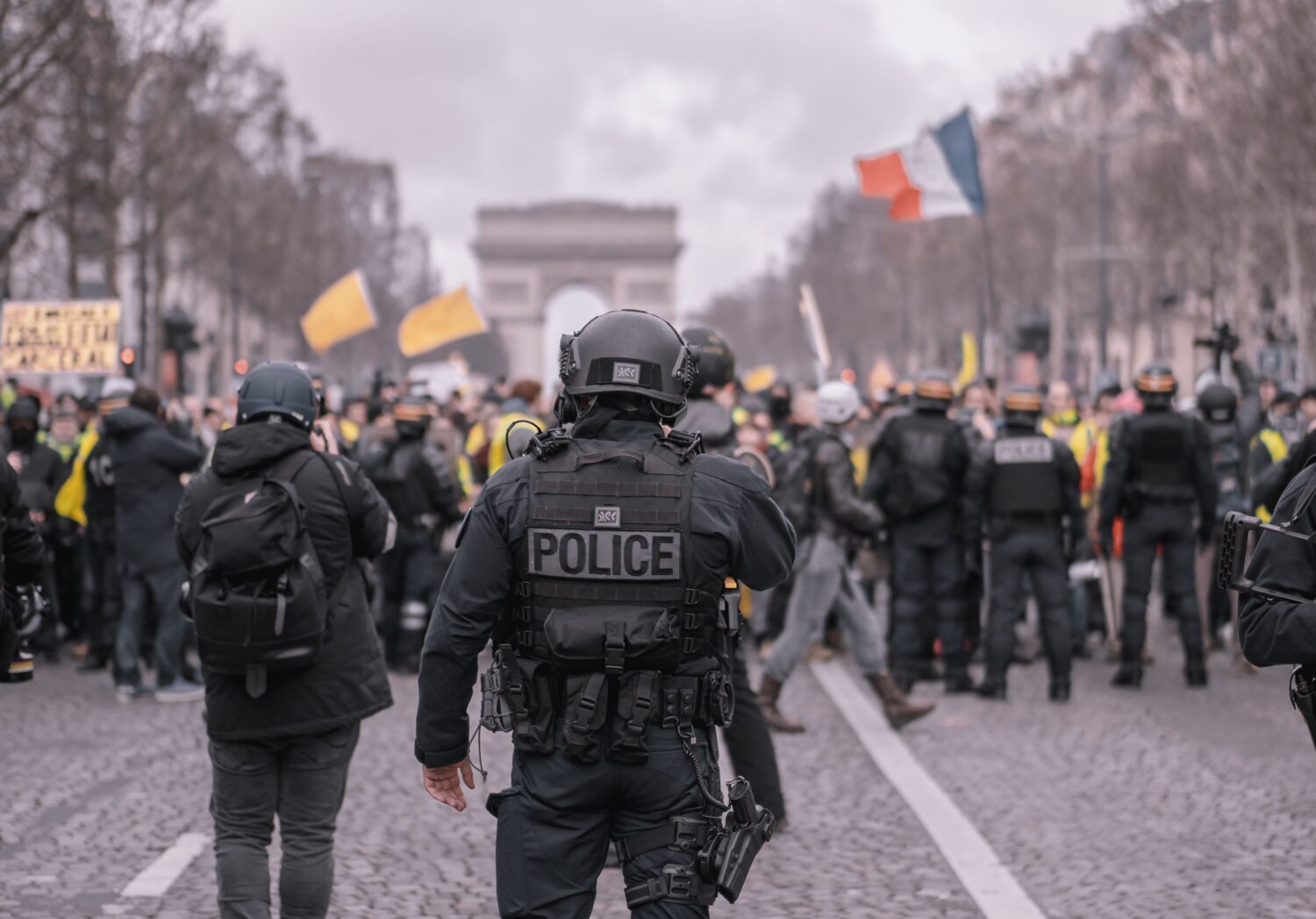
The Human Cost of Protest Policing: Gabriel Pontonnier’s Case Before the ECtHR
Recent injuries during student protests in France in October 2026 have renewed questions about the weapons and level of force that police use against demonstrators. Organisations have reported the use of tear gas, stun grenades and other force against students protesting over education conditions across the country. Following a grenade incident that led a teenager to lose a hand, French authorities announced a temporary suspension of stun grenade use during the protests, pending an investigation. The suspension, but also the reported re-authorisation of these weapons for subsequent protests later that month, underscores the need to examine more closely the risks they posed and their use in protest settings.
For Gabriel Pontonnier and his brother Florent, these questions are deeply personal, and the potentially devastating consequences of less-lethal weapons were felt long before these latest demonstrations. In November 2018, both were injured by police grenades during a Yellow Vests (Gilets Jaunes) protest in Paris. Their cases are now before the European Court of Human Rights (ECtHR).
The explosion severely injured Gabriel’s left hand, leading to the amputation of three fingers, while his brother Florent also sustained injuries to his feet and leg caused by grenade fragments. The harm went beyond the immediate physical injuries. Gabriel was left to live with a permanent disability, while his family experienced physical injuries and psychological trauma.
The grenade involved in their cases, the GLI-F4, was withdrawn from use in January 2020. But withdrawing one weapon does not resolve the broader concerns about explosive weapons being used by police. Although recent demonstrations involved a different type of grenade, the risks for severe, life-changing injuries remain. Even before the incident affecting Gabriel Pontonnier and his brother Florent, another protester, Rémi Fraisse, had been killed in 2014 as a result of the police use of another type of stun grenade.
This context demonstrates why scrutiny must extend beyond the withdrawal of any one weapon. Two urgent questions are back in focus:
Are these weapons suitable for use at protests? And are police taking the necessary precautions and using force only when strictly necessary and proportionate?
These are the questions addressed by members of the United Against Torture Consortium (UATC) – REDRESS, Omega Research Foundation, and the World Organisation against Torture (OMCT) – in their recent joint intervention in the case brought by the Pontonnier brothers against France before the ECtHR.
The criminal proceedings in France ended with the officer’s acquittal, leaving the brothers without justice.
The case before the ECtHR therefore offers an opportunity to re-examine questions about the force used against them and the authorities’ responsibility to prevent such harm.
At the heart of the case is Article 3 of the European Convention on Human Rights, which prohibits torture and inhuman or degrading treatment or punishment. This protection is particularly absolute, it cannot be suspended or justified by considerations of public order, security or the conduct of demonstrators. It applies even when protests turn violent or cease to be peaceful. While authorities may take necessary measures to restore public order, they must do so without resorting to treatment that violates this fundamental protection.
To comply with an Article 3 obligation, States must follow specific standards and parameters when using force and weapons in protests. The UATC explores these obligations in its policy paper, Protesting without Fear, which sets out the standards States must uphold to protect the right to protest while preventing torture and other ill-treatment.
The Potonnier case also invites scrutiny of the weapons themselves, including their suitability for law enforcement operations in the context of protests, especially where the risks of injury in crowded public spaces are high and foreseeable. It also examines what measures States are expected to take to ensure that, when policing protests, they minimise the risk of torture and other ill-treatment when policing demonstrations. UATC’s guidance note, Challenging Repression., complements these issues providing practical guidance on documenting the misuse of police weapons during protests and gathering evidence to support accountability.
Preventing torture and other ill-treatment in protests
The right to protest is essential to a democratic society. While authorities have a responsibility to maintain public order, their response must comply with human rights obligations, including the absolute prohibition of torture and other ill-treatment.
This requires both suitable equipment and safeguards governing its use. The choice of weapon demands careful review of its inherent risks and whether they are appropriate for use in the first place. Replacing a weapon must involve a fresh assessment of its replacement’s risks – not an assumption that a different device is safe.
Once selected for policing operations, the use of all weapons requires appropriate regulation, training and deployment.
The Pontonnier brothers’ case – alongside previous cases and the incidents in recent demonstrations – demonstrates why these safeguards matter.
As protests in France renew scrutiny of police tactics, the case before the ECtHR offers an opportunity to examine the State’s responsibility not only in the selection and regulation of explosive weapons used by police, considering their inherent characteristics and risks, but also how police operations are planned and conducted in the context of protests.
The organisations are grateful to Naomi Hart of Essex Court Chambers for her pro bono contribution to drafting the intervention.
About the Consortium
The United Against Torture Consortium pools the strengths and expertise of six leading anti-torture organisations (IRCT, OMCT, FIACAT, APT, Omega Research Foundation and REDRESS) in partnership with over 400 civil society organisations and partners in more than 120 countries, to strengthen and expand the anti-torture movement. The European Union funds this project.
Photo by: Alois Moubax/Pexels