
UK Risks Becoming a Safe Haven for War Criminals, Lords Warn: Calls Grow for Universal Jurisdiction Reform
Suspected perpetrators of atrocities in countries such as Iran and Russia are freely coming to the UK to enrol their children in schools, shop at Harrods, and visit their luxury properties in Mayfair, all while UK law prevents their arrest or prosecution, the Government heard yesterday from members of the House of Lords.
A cross-party group of peers urged the UK Government to close long-standing gaps in the UK’s universal jurisdiction laws, warning that without reform, the UK will remain a safe haven for individuals credibly accused of the world’s gravest crimes, including genocide, war crimes, and crimes against humanity.
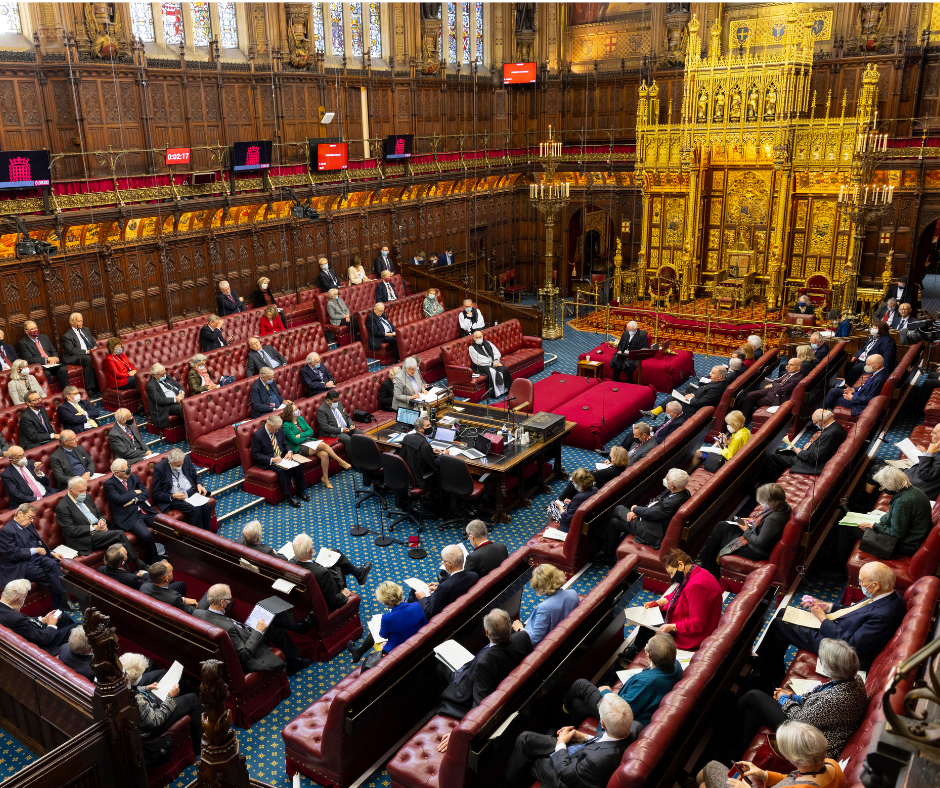
The calls came during a House of Lords debate on proposed amendments to the Crime and Policing Bill, which seek to update the International Criminal Court Act 2001 (ICCA). At present, the ICCA prevents authorities from investigating or prosecuting core international crimes unless the suspect is a British national or resident, a restriction peers described as unjustifiable and out of step with international standards.
The amendments, supported by REDRESS, would allow UK courts to prosecute anyone present in the UK for these crimes, bringing domestic law into line with countries such as Germany, France, and Sweden.
Ahead of the debate, REDRESS provided detailed briefings to peers, setting out the case for reform.
Introducing the amendments, Lord Alton of Liverpool, Chair of the Joint Committee on Human Rights (JCHR), described the proposals as a necessary response to a glaring “justice gap” that allows alleged perpetrators of atrocity crimes to enter the UK with impunity:
“The amendments would mean that perpetrators who can currently travel to the UK with impunity would at least run the risk of arrest and prosecution. If all this achieved was a deterrent effect, that would at least be better than we have now.”
Lord Alton emphasised that the reform is not novel or radical: 28 UN Member States already allow prosecutions based solely on the suspect’s presence in the country, without any residency or nationality requirement. Baroness Kennedy of The Shaws highlighted the inconsistency in UK law. Under the Criminal Justice Act 1988, torture can already be prosecuted based on presence alone. Similarly, under the Geneva Conventions Act 1957, grave breaches committed as far back as 1957 can also be prosecuted without residency ties.
“There is no consistency across the piece. For some grievous and egregious crimes, you can be arrested if you come into Heathrow Airport, but under the ICC legislation, you must be a resident or British national. We are seeking to address that inconsistency, ” said Baroness Kennedy.
She warned that this is a live issue. People accused of grave international crimes have been entering the UK without fear of arrest or prosecution, denying survivors in the UK and abroad justice.
Lord Wigley highlighted that the issue is not only moral and legal, but one of national security. Referring to the killing of British aid worker Ryan Evans amid a pattern of war crimes, he stressed that the current framework also fails British victims and their families. Support for reform came from across the House, including Lord Macdonald of River Glaven, former Director of Public Prosecutions; Lord Verdirame, legal scholar and barrister; and Lord Sentamu, who was imprisoned by dictator Idi Amin’s regime in Uganda before seeking refuge in the UK and later becoming Archbishop of York.
Drawing on survivor testimony, Baroness Brinton noted that people fleeing atrocities in Sudan, Iran, Cuba, Russia, Tibet, and China look to the UK to uphold universal jurisdiction when justice is impossible at home.
The debate demonstrated growing recognition that the UK’s universal jurisdiction framework is inconsistent, outdated, and out of line with its international obligations. Survivors depend on universal jurisdiction as a last resort when domestic systems fail.
Under the proposed reforms, the UK Government would retain oversight of prosecutions, including the requirement for Attorney General consent.
Read the full briefing on our proposed amendments to the Crime and Policing bill here.
Photo: CC BY-SA 4.0