Survivors Leading the Fight Against Enforced Disappearance in Mexico
By Hannah Bottarel, Legal fellow at REDRESS & Consultora Solidaria
For families of disappeared persons in Mexico, the search for their relatives is often a lonely and dangerous struggle. Consultora Solidaria (Apuesta Solidaria AC), a Mexican human rights organisation works alongside these families to document abuses, develop collective advocacy, and press for action.
That survivor-led advocacy contributed to an unprecedented development as a the United Nations (UN) Committee on Enforced Disappearances (CED) Mexico’s disappearance crisis to the UN General Assembly, recognising its widespread and systematic nature.
A crisis of staggering proportions
In Mexico, over 132,000 people are officially registered as “disappeared,” although the true figure is believed to be far higher, as many cases go unreported. An estimated 4,500 clandestine graves have been uncovered, containing thousands of bodies and human remains.
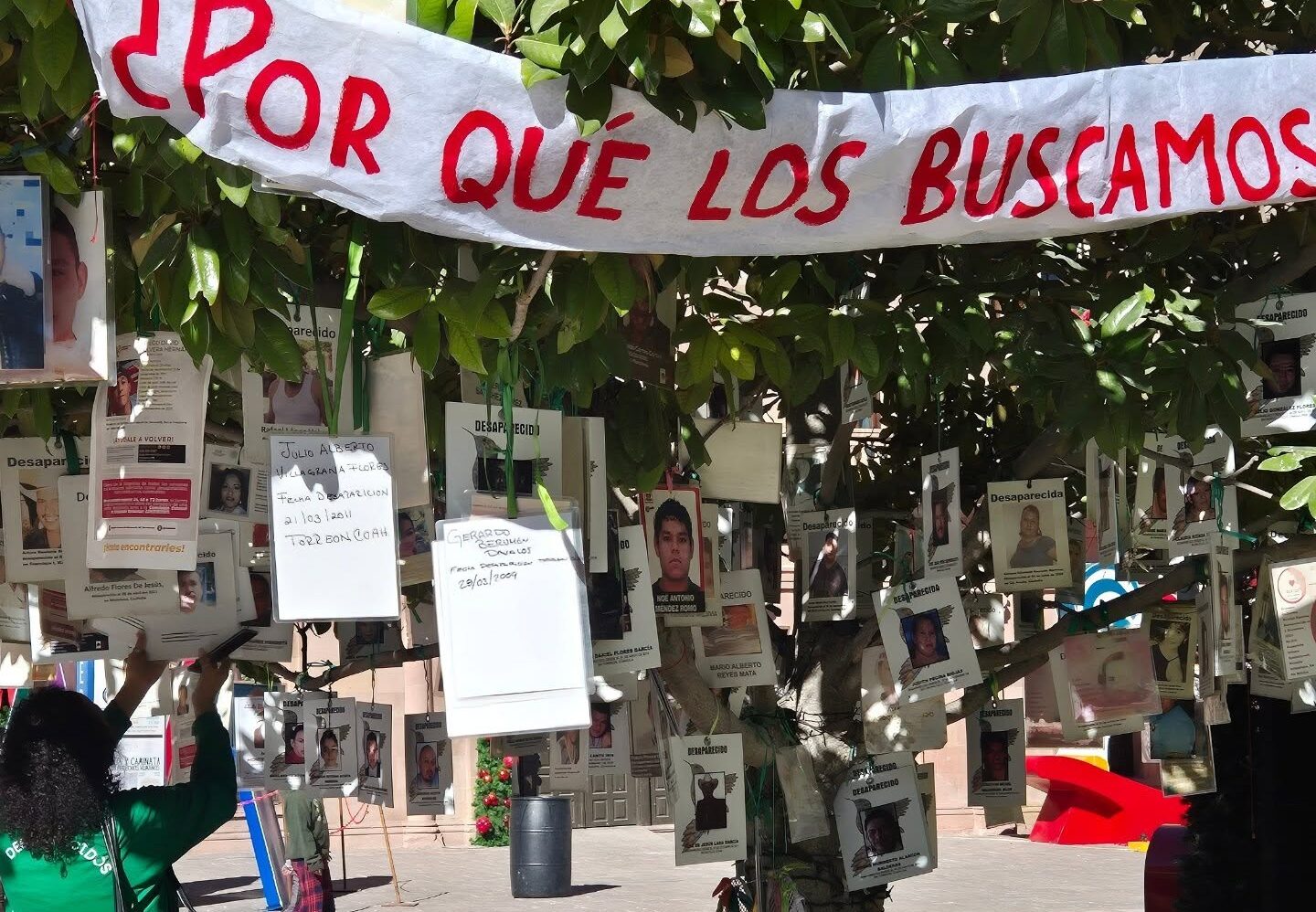
For the families left behind, the search for their relatives proves dangerous. Female searchers, known as buscadoras, face threats, murders, disappearances, arbitrary detention, and public stigmatisation because of their attempt to find disappeared family members, In what has been described as a “high-risk activity.”
In this context, supporting families to document the abuses and present their experiences before international bodies is essential to securing protection and accountability. Consultora Solidaria therefore helped position survivors not only as witnesses of the crisis, but as those best placed to help shape the response.
From documentation to historic action
For years, civil society organisations and families of disappeared persons have called on UN bodies, including the CED, to take effective action. Consultora Solidaria worked closely with Fuerzas Unidas por Nuestros Desaparecidos en Coahuila y México (FUUNDEC-M), centring survivors in collective advocacy efforts. It convened a coalition of 24 NGOs, creating a platform where survivors’ experiences could inform and drive strategic action.
This work helped connect what families were experiencing on the ground with international processes and human rights mechanisms.
When families from Teuchitlán, Jalisco uncovered a forced recruitment camp for young people that turned out to be a clandestine grave, Consultora Solidaria submitted the evidence to the UN Working Group on Enforced Disappearances (WGED) and filed a request for urgent action with the CED. The procedure called on the State to take immediate measures to search for the disappeared persons, investigate what happened, and protect the buscadoras, families, and witnesses involved.
Then, on 4 April 2025, the CED took an unprecedented step: for the first time in its history, it activated Article 34 of the International Convention for the Protection of All Persons from Enforced Disappearance. Article 34 allows the Committee, when it receives well-founded indications that enforced disappearance is being practised on a “widespread or systematic basis,” to urgently bring the situation to the attention of the UN General Assembly. The provision is designed to mobilise international cooperation to unlock technical assistance, financial support, and specialist resources that a country may need to confront a crisis of this scale. Its activation signalled that the situation in Mexico had reached a threshold that could no longer be addressed through routine monitoring alone.
In April 2026, the Committee concluded that there are “well-founded indications” that enforced disappearances in Mexico constitute crimes against humanity and referred the situation to the UN General Assembly. The referral called on the General Assembly to consider measures including technical cooperation, financial support, and specialist assistance for search operations, forensic analysis, and effective investigations to address the crisis.
Empowering survivors, compelling accountability
With EU funding through the United Against Torture initiative, Consultora Solidaria supported families to document the abuses they experienced, organise collectively, and bring their demands to international human rights mechanisms.
For the families involved, this created new opportunities to have their experiences heard and shape the response to Mexico’s disappearance crisis. Before the project, many were searching for their loved ones alone, facing threats with little support, and struggling to access the international processes designed to protect them. Through this project, 120 families across four regions of Mexico gained a structured channel to bring their testimonies and evidence before UN bodies, while strengthening collective advocacy shaped by survivors’ priorities. The activation of Article 34 and the CED’s subsequent referral to the General Assembly have created an important framework for sustained international scrutiny of Mexico’s disappearance crisis. These developments highlight what survivor-led advocacy can achieve when families have the resources and support.
Photo by: Consultora Solidaria
This blog is part of a series highlighting the achievements and impacts of projects led by national and regional organisations supported by REDRESS through the United Against Torture Consortium. Through these partnerships, REDRESS has supported more than 46 organisations working to combat torture and other forms of violence against dissenting voices, including human rights defenders and LGBTIQ+ persons.
LEARN MORE ABOUT OUR PARTNERS’ WORK