
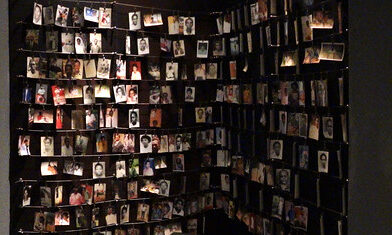
Toward a Crimes Against Humanity Convention: Increasing Accountability for the World’s Most Serious Crimes
By Claire Moore, Legal Fellow
Despite decades of progress in realising justice for victims of mass atrocities, there remains no dedicated treaty on crimes against humanity. This significant gap in international law may soon be filled following years of work by the UN International Law Commission and sustained advocacy from states and civil society organisations.
Crimes against humanity may include murder, torture, enforced disappearance, persecution, sexual violence, imprisonment, and apartheid, when committed as a widespread or systemic attack against a civilian population. Unlike war crimes, crimes against humanity may be committed in a time of peace as well as armed conflict.
Negotiations toward a treaty prohibiting these crimes are gaining momentum. Following the adoption of the International Law Commission’s Draft Articles, the General Assembly ordered to convene a Conference of Plenipotentiaries in 2028 and 2029 to finalise and open a treaty for state signature and ratification.
Against this backdrop, REDRESS hosted a webinar as part of its REDRESS in Practice series under our Global Initiative Against Impunity and Solidarity programme, supported by the Global Initiative Against Impunity. The panel brought together experts from civil society to discuss recent developments in the negotiations, emerging State positions, and opportunities for coordinated civil society advocacy.
REDRESS Senior Legal Advisor Julie Bardeche outlined the progress achieved during the first session of the UN Preparatory Committee in January 2026, and how civil society organisations can influence the treaty-making process.
The panel highlighted the need for a treaty dedicated to crimes against humanity, even with the existing international legal frameworks. Hugo Relva, a Legal Advisor at Amnesty International, argued that neither the Rome Statue nor customary international law impose sufficiently robust obligations on states to criminalise crimes against humanity domestically or cooperate with extradition and universal jurisdiction mechanisms.
Survivor participation and prevention
Speakers also emphasised the importance of survivor participation in negotiations and drafting. Tess Graham of Global Justice Centre noted that the draft articles contain important protections, including obligations of prevention, guarantees of non-reoccurrence, and requirements of criminalisation and prosecution of crimes against humanity. However, she also argued that provisions on reparations could be stronger and more specific and highlighted proposals for a monitoring mechanism that would allow victims to directly raise concerns about implementation with the international community. Kate Vigneswaran, Director of the Global Accountability Initiative at the International Commission of Jurists, echoed the need for a monitoring mechanism.
Elise Fletcher of the International Federation for Human Rights also espoused the importance of prevention in the Convention, adding a criticism that the draft does not address the crime of incitement, which creates a significant gap in accountability in the Convention on Crimes Against Humanity, especially when compared to the Genocide Convention.
Regional perspectives and gender-based harms
Aakash Chandran, Senior Law and Advocacy Manager at Asia Justice Center, highlighted the growing support for the Convention among Asian states including the Philippines, Myanmar, Thailand, Bangladesh, and Afghanistan. He also noted efforts from Asian States to ensure the treaty reflects issues such as slavery, colonialism, and environmental harm, reflecting lived experiences.
The panel further explored how the Convention can address gender-based harms. Akila Radhakrishan, an international human rights lawyer and advisor to the End Gender Apartheid campaign, argued that the drafting process should reflect a view of gender as structural rather than solely consider sexual violence. She called for a stronger recognition of harms targeting reproductive autonomy and emphasised the need for gender expertise and gender-balanced participation throughout negotiations.
With the next session of the Preparatory Committee scheduled for 2027 and diplomatic negotiations beginning in 2028, the coming years will be critical in determining whether the international community can finally close one of the most significant gaps in justice and accountability for victims of mass atrocities.
Join the coalition for a Convention on Crimes against Humanity here.
Read the webinar resources here and see our upcoming webinars here.
Photo by: Adam Jones PHD Global photo archive/ WIkimedia commons