
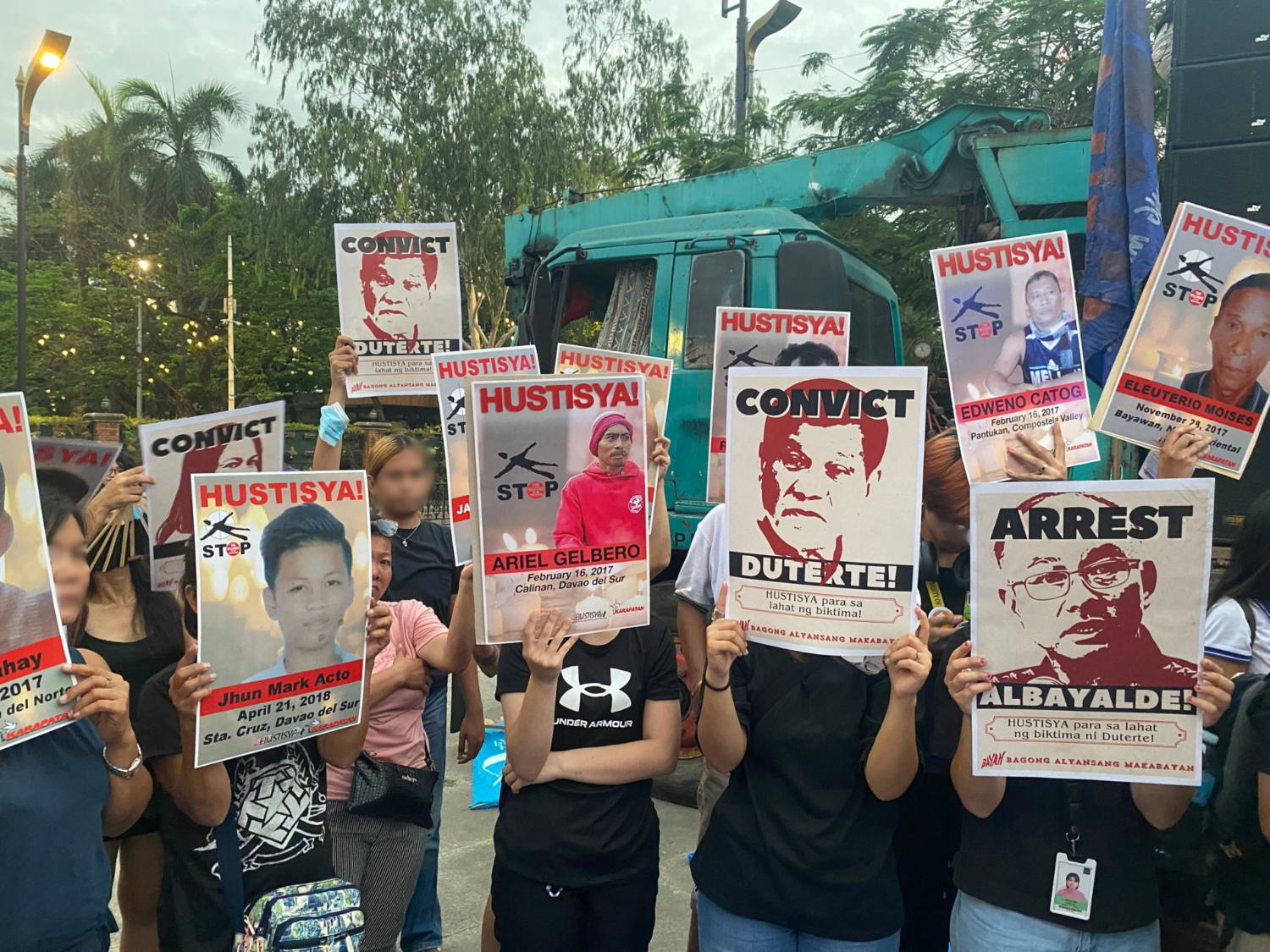
Duterte Trial: Survivors’ Long Fight for Justice Reaches a Historic Moment
27 November 2027 — 30 November marks a historic moment for survivors and families affected by the Philippines’ so-called “war on drugs”, as former President Rodrigo Duterte will stand trial before the International Criminal Court (ICC) on charges of crimes against humanity. After years of loss, intimidation and campaigning for accountability, survivors and families are closer than ever to having their experiences recognised before an international court.
Jay-R Pepito, whose father was killed during the ‘War on Drugs’, said:
“The hardship was intense… well, it was like we were buried under a small [grave]. It was like we lost hope to live. We didn’t know how we’d get back up again. Because it’s different when you get back up with a parent with you. Not when you yourself have to get back up and you’re lifting your siblings too.”
For survivors and families, this moment is about much more than the prosecution of one individual. It is about the thousands of lives lost, the families left behind and the communities that have lived with the consequences of State violence and impunity. Many have spent over a decade demanding truth and accountability. Their determination, alongside the support of civil society organisations, has helped bring this case to the courtroom, despite the risks and challenges they have faced.
A mother who lost her children during the ‘War on Drugs’ shared her hopes for the trial:
“What I want is for my children’s memory to live on, even though they are no longer alive. But I also want people to know that a system of killings has no place in our society. Many innocent people are caught up in it. I want this system to come to an end… because if this continues, many more people will die.”
She added:
“I want those responsible to be held accountable and removed from power. They should never be given another chance to return to office and become president again… Digong [Rodrigo Duterte] should also pay compensation to the victims for the harm they have suffered.”
Duterte faces three counts of crimes against humanity of murder and attempted murder, relating to alleged crimes committed during the “War on Drugs”, in which an estimated 12,000 to 30,000 civilians were killed between 2016 and 2019. In April 2026, ICC judges confirmed all charges, finding substantial grounds to believe that the alleged crimes formed part of a widespread and systematic attack against the civilian population.
Ensuring that survivors are not left behind
While 539 victims have been authorised to participate in the proceedings, this represents only a fraction of those affected. Many cannot participate in the proceedings because of security concerns, practical barriers or because the crimes they experienced fall outside the scope of the case.
Those who cannot participate directly must not be forgotten or made to feel that their experiences do not matter. Trauma-informed and meaningful outreach to affected communities is therefore essential to ensure that all victims feel recognised, informed, and able to engage with the Court.
One of the victims said:
“The case and trial should continue because so many people have become victims of his actions. So much has been done to these people. Many victims have yet to be documented or included in the list. Only a few names have been recorded so far. It’s heartbreaking that so many victims have been left off the list.”
Protecting the possibility of justice
Duterte is the first former Asian head of state to face trial before the ICC, making these proceedings particularly significant. They are also unfolding at a time when the Court faces unprecedented attacks against its independence. On 9 October 2026, the United States announced sanctions against the ICC, threatening its ability to operate as one of the few international avenues through which victims of the gravest crimes can seek accountability when national systems fail. State parties must do everything in their power to ensure the Court can continue delivering justice.
Akrtkario Bian Villanueva, Legal Officer of Initiatives for Dialogue and Empowerment through Alternative Legal Services (IDEALS), a legal aid group documenting abuses and assisting affected victims and families, said:
“The trial of Rodrigo Duterte for crimes against humanity at the International Criminal Court marks an important milestone in the long journey families have made in their search for justice. As the trial begins, their hopes for holding those responsible for the deaths of their loved ones are drawing closer to realisation. They will need even more support now, as the trial progresses and their journey to hold all perpetrators to account continues.”
“The trial sends a strong signal that the international community can and will uphold important norms by making perpetrators at the highest-level answer for mass atrocities. It is now up to the Philippine government to follow the Court’s lead and work towards ensuring that all others responsible face justice, and that crimes of such scale and magnitude never happen again.”
The courage and perseverance of survivors and families have helped make this trial possible. Their voices and experiences must remain at its centre.
This press release is endorsed by the following members of Global Initiative Against Impunity: the Coalition for the International Criminal Court, Civil Rights Defenders, ECCHR, FIDH, Impunity Watch, and REDRESS.
For more information, please contact: in English, Eva Sanchis (REDRESS Head of Communications) on [email protected] or +44 (0)7857 110076; in Filipino, Dianne Magbanua (REDRESS Communications Officer) on [email protected] or +44 (0) 7497 778463.
Photo: Wikimedia commons via CC BY-SA 4.0.
