
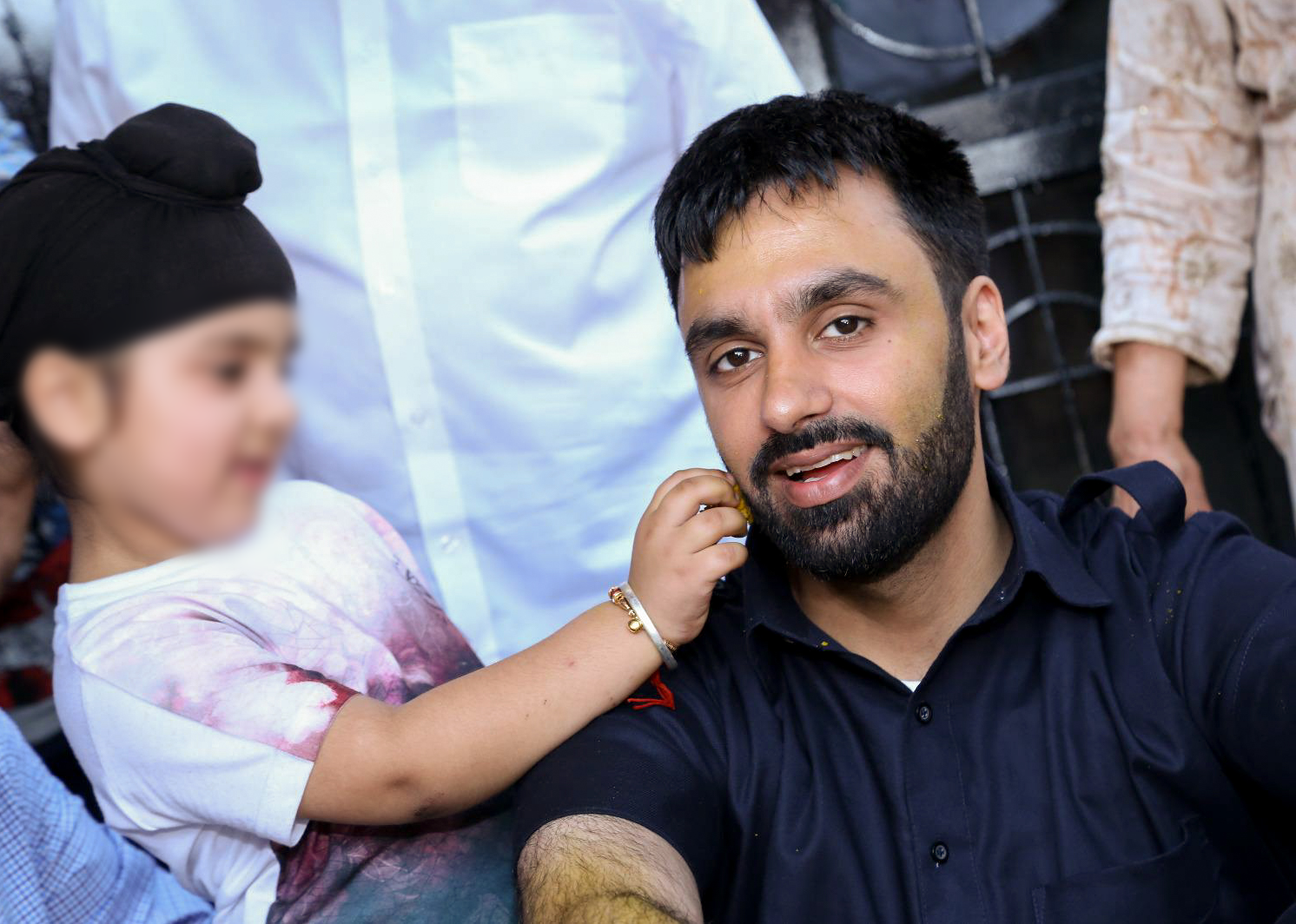
Jagtar Can Finally Leave Prison. Now He needs to Come Home
Today, after almost nine years in arbitrary detention, our client Jagtar Singh Johal was finally granted bail in all the remaining cases against him.
Jagtar is a British human rights activist from Dumbarton, Scotland, who was targeted for his activism, according to UN experts.
REDRESS has been working alongside Reprieve and Jagtar’s family in the UK to challenge his arbitrary detention and support efforts to bring him home.
Eighteen months after his acquittal on all charges in the first case against him to reach a verdict, the High Court in India challenged prosecutors to produce evidence to justify keeping Jagtar in prison. They were unable to do so.
Today marks a hugely significant moment for Jagtar and his family. But the fight isn’t over yet.
As we’ve seen in our other complex arbitrary detention cases, including that of Nazanin Zaghari-Ratcliffe, release doesn’t necessarily mean someone can come home straight away, particularly where wider diplomatic or political considerations are involved.
Jagtar remains in custody whilst arrangements are made for the bail bonds to be paid. The bail conditions will prevent him from leaving India and bar him from commenting publicly on the remaining cases against him. Nonetheless, it is hoped that the eight remaining cases against him will be dropped without delay, so that he can be free to return to his wife and family in Dumbarton.
Commenting on today’s ruling, his brother Gurpreet Singh Johal said:
“The past two years has been an expensive rollercoaster, contesting bails at the Supreme Court and back to the High Court. I had a long, sleepless night knowing that the decision would be made this morning. Now, all I can think about is Jagtar walking out of prison. We have waited so long and fought so hard for this moment. Whenever the evidence against Jagtar is tested in court, judges find what we’ve said all along, which is that there isn’t any. How long will this sick joke of a legal process be allowed to continue? We’re obviously delighted that Jagtar will soon be released, but he won’t be truly free until he is back in Dumbarton, with his wife and family.”
REDRESS Senior Legal Advisor Chris Esdaile said:
“This is welcome news, but it can’t undo the intolerable suffering Jagtar has been put through after nine years of arbitrary detention. As we’ve seen in our other complex arbitrary detention cases, including Nazanin Zaghari-Ratcliffe’s, release doesn’t necessarily someone can come home straight away, particularly where wider diplomatic or political considerations are involved. Despite the strict bail conditions, we now hope that the remaining deeply flawed proceedings can finally be dropped, so he can get home to his family as soon as possible. The allegations that he was tortured also need to be properly investigated, and those responsible held to account.”
This should be the beginning of the end.
We will continue to stand with Jagtar and his family until he is home.
More about the case
Jagtar was abducted by Indian police officers on 4 November 2017, three weeks after his wedding. He has now been imprisoned for 3,241 days with no end in sight.
In March 2025, Jagtar was acquitted on all charges in a case in Punjab, after a court rejected the allegations against him made by Indian authorities – the judge noted that the prosecution had “miserably failed” to provide credible evidence to prove its case.
In May 2025, a group of more than 100 MPs and Peers wrote to then Foreign Secretary David Lammy, calling for “quick and decisive action” from the Government to bring Jagtar home.
In April 2026, a group of ten UN legal experts called on India to release Jagtar immediately, highlighting the “profound miscarriage of justice” in his case.
“Eight and a half years of arbitrary detention without a clear path to trial is not justice, it is unlawful suffering…[and] a form of psychological torture,” they wrote. “The fact that he was acquitted, yet still faces near-identical charges, raises serious concerns about double jeopardy, the presumption of innocence, the misuse of counter-terrorism laws, and the integrity of the proceedings.”
For more information, contact Eva Sanchis, REDRESS’ Head of Communications, on [email protected] or +44 (0) 7857 110076; see Jagtar Singh Johal | Redress and read our report, Torture Normalised: State Violence in India.