Strengthening Prosecution of LGBTIQ+ Violence as Torture
By Claire Moore, REDRESS Fellow and National Gay & Lesbian Human Rights Commission, Kenya
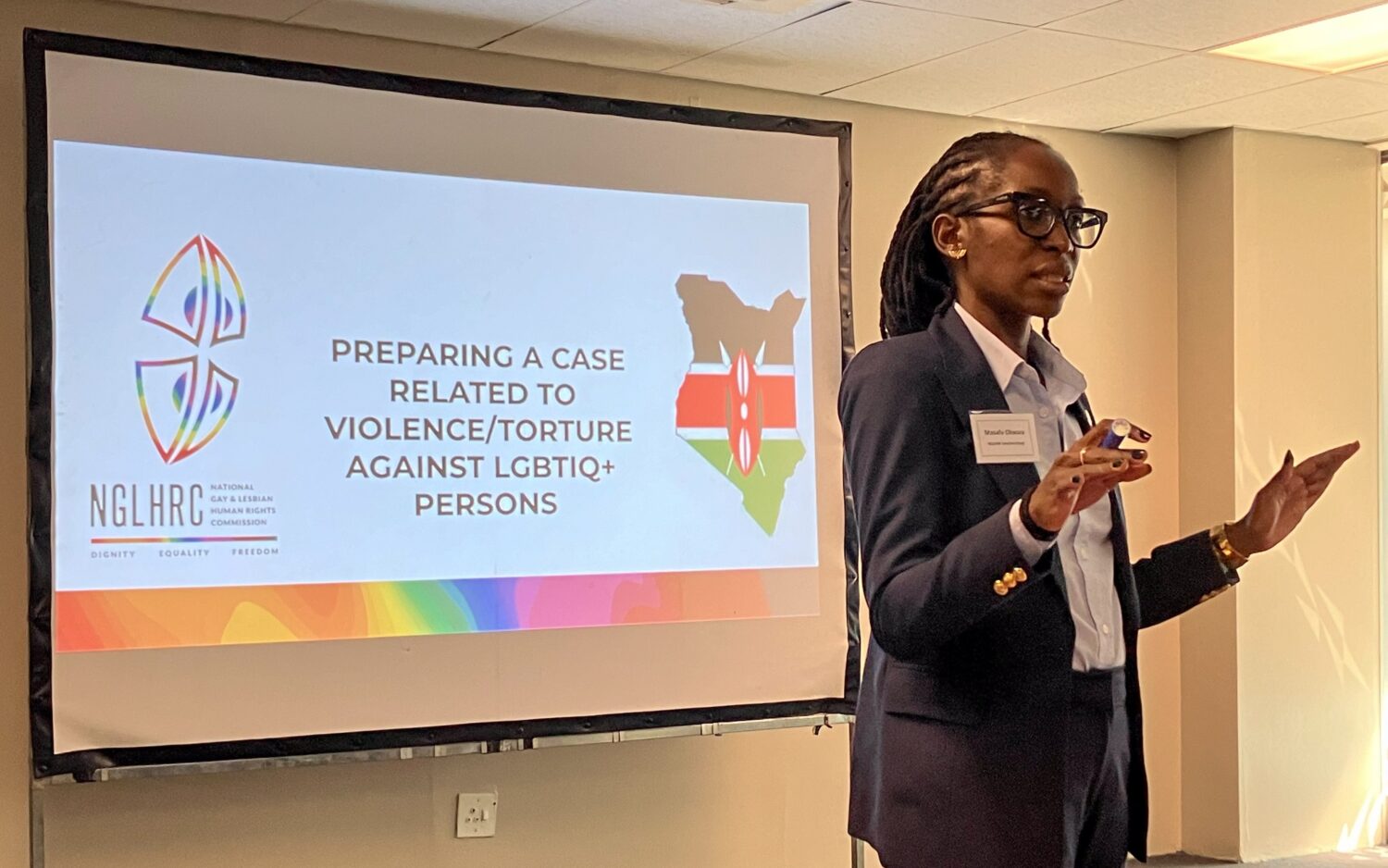
In Kenya, LGBTIQ+ persons continue to face violence, discrimination and significant barriers to accessing justice. The National Gay and Lesbian Human Rights Commission (NGLHR) has been working for more than a decade to challenge these barriers, providing legal support to survivors and communities while advocating for greater accountability for human rights violations.Building on this work NGLHRC has taken important steps across 2025 and 2026 to facilitate access to justice for LGBTIQ+ people in Kenya. A key milestone was the National Prosecutors Capacity Building Conference, held in March 2026. In Makueni County, southeast of Nairobi, 11 legal professionals, including eight prosecutors from the County Office of the Director of Public Prosecutions (ODPP), gathered for two days of training on recognising and prosecuting violence against LGBTIQ+ persons as torture.
The training took place against a challenging backdrop for LGBTIQ+ rights in Kenya. In September 2025, 11 civil society organisations released the Lives on the Line report, documenting over 2,100 instances of violence, harassment, and discrimination against sexual and gender minorities in Kenya between October 2023 and September 2024. NGLHRC’s Legal Aid Centre, which provides pro bono legal assistance to LGBTIQ+ persons, has received more than 5,500 cases involving human rights violations since its inception in 2012. These include unlawful detention, physical assault, threats, blackmail, extortion, and psychosocial distress that may amount to torture or other ill-treatment.
The criminalisation of same-sex relations in Kenya’s Penal Code, upheld by the High Court of Kenya in 2019, contributes to a context of hostility against LGBTIQ+ persons and facilitates impunity for these abuses. In a 2022 report Unequal Justice: Accountability for Torture Against LGBTIQ+ Persons in Africa, REDRESS found that discriminatory laws can discourage victims from reporting violations and contribute to a lack of political will and adequate training to investigate complaints of violence against sexual and gender minorities.
Amid these challenges, the National Prosecutors Capacity Building Conference focused on strengthening the ability of prosecutors to recognise, investigate and prosecute violence against LGBTIQ+ people as torture. The training addressed five key areas:
- Building prosecutors’ understanding of sexual orientation, gender identity and expression, and sexual characteristics (SOGIESC), alongside the lived realities of LGBTIQ+ persons; Deepening understanding of torture and strenthening legal framing and charge selection;
- Strengthening prosecutorial oversight of investigations and evidence development;
- Promoting survivor-centred prosecution through discussion of psychosocial support, mental health documentation, witness protection, and in camera testimony; and
- Integrating community perspectives through a panel of frontline paralegals from Makueni.
The conference also provided space for rrosecutors to consider practical challenges in cases involving LGBTIQ+ people. Discussions included the use of forced anal examinations as evidence and the treatment of intersex individuals in prisons, drawing on the Richard Muasya case.Several participating prosecutors were already working on cases involving gender-based discrimination, violations of dignity, targeted violence, and abuse by State authorities. The engagement therefore created an opportunity to strengthen how such cases are understood and pursued, while laying the groundwork for continued institutional engagement between NGLHRC and the ODPP. s.
The conference formed part of a broader programme that expanded access to legal support and strengthened the capacity of justice actors and communities to address violence against LGBTIQ+ persons. During the project, NGLHRC provided legal support in 306 cases and undertook fact finding missions in four cases involving possible torture or ill-treatment. Prosecutors and justice actors received the Guidelines on Prosecuting LGBTIQ+ Violence as Torture, providing them practical guidance for handling such cases. Two public advocacy events further strengthened awareness of civic rights, torture law, and documentation of LGBTIQ+-related violence among 15 stakeholders, while 27 LGBTIQ+ persons were supported to register to vote.
With EU funding under the United Against Torture initiative, NGLHRC’s achievements demonstrate how support in community-led legal work can contribute to longer-term changes in access to justice and accountability. NGLHRC has helped lay the groundwork for violence against LGBTIQ+ persons to be more effectively recognised and addressed as torture.
Photo by: NGLHRC, Kenya
This blog is part of a series highlighting the achievements and impacts of projects led by national and regional organisations supported by REDRESS through the United Against Torture Consortium. Through these partnerships, REDRESS has supported more than 46 organisations working to combat torture and other forms of violence against dissenting voices, including human rights defenders and LGBTIQ+ persons.
Read other blogs in this series:
LEARN MORE ABOUT OUR PARTNERS’ WORK