
The Hooded Men: A Landmark Case That Still Matters Today
By Lieutenant Colonel the Reverend Nicholas Mercer
This blog is part of a series featuring representatives and experts in the field of strategic litigation against torture, discussing cases catalogued in REDRESS’ Casebook 3.
In this blog, Lieutenant Colonel the Reverend Nicholas Mercer examines the treatment of the Hooded Men, the landmark ruling it led to, and his own encounter with the same techniques in Iraq.
The case of Ireland v United Kingdom, decided on 18 January 1978, was the first inter-state case decided by the European Court of Human Rights (ECtHR or the Court). It remains a landmark in the fight against torture and inhuman and degrading treatment to this day.
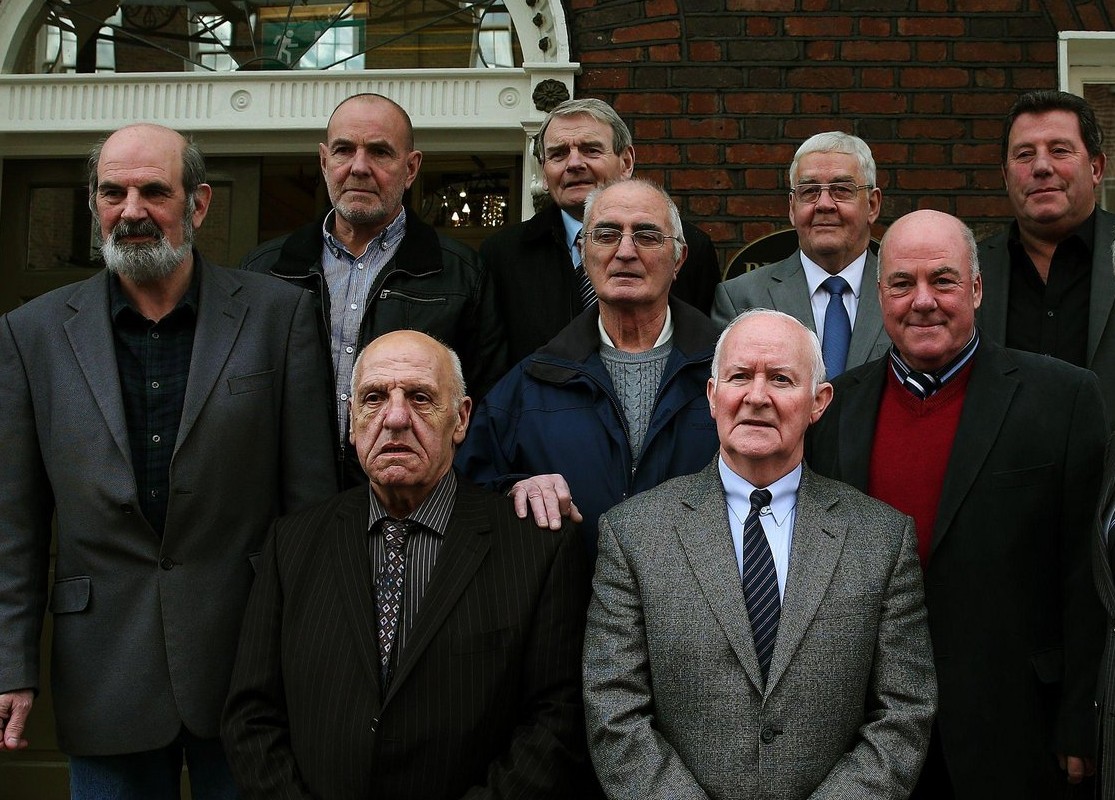
In 1971, British security forces subjected fourteen men detained in Northern Ireland to what became known as “the five techniques”. They hooded the men, forced them to stand in painful positions, exposed them to continuous noise, and restricted their sleep, food, and water. The men subsequently became known as the “Hooded Men”. Their treatment was at the centre of Ireland v United Kingdom.
The case arose at the beginning of “the Troubles”, a period of sectarian conflict and paramilitary violence in Northern Ireland involving the Irish Republican Army (IRA), loyalist groups, and the British authorities. In 1971, the British Government authorised a military operation called “Operation Demetrius” to enable the security services to arrest and detain people on suspicion of involvement with the IRA. Similar power had been used in the 1950’s and was authorised again in 1971, despite opposition from the British Army. The operation, however, was a disaster and eventually led to direct rule from London after the collapse of the Stormont Assembly. The case of Ireland v United Kingdom arose from the treatment of some of the detainees during a connected operation codenamed “Operation Cabala”.
The “five techniques” had been developed during the British colonial insurgency campaigns and were used together as a method of interrogation. They consisted of hooding, sleep deprivation, food deprivation, exposure to white noise and stress positions. As described in Ian’s Cobain’s book Cruel Britannica, these methods are designed to leave no visible marks that would result either in official embarrassment or the risk of war crimes prosecutions.
Out of all the men detained during Operation Demetrius, fourteen (the “Hooded Men”) were chosen for this type of interrogation and taken to a secret interrogation centre at Shakleton Barracks. The effects on the “Hooded Men” were severe: some suffered a degree of lasting damage. The experiences of Sean McKenna and Liam Shannon, documented in the original proceedings, illustrate profound consequences of these techniques. McKenna suffered gross symptoms of anxiety, while Shannon continued to experience nightmares and flashbacks and would panic whenever something covered his face.
In December 1971, the Irish Government brought a complaint to the European Commission on Human Rights claiming, inter alia, that the treatment breached Article 3 of the European Convention on Human Rights (ECHR), which prohibits torture and inhuman or degrading treatment or punishment. The Commission concluded that the five techniques amounted to torture. However, considering the case in February 1978, the Court ruled that the five techniques amounted to inhuman treatment and degrading treatment. It stopped short of finding that they amounted to torture.
In 1972, the Government of Prime Minister Edward Heath announced that the five techniques would not be used in future as an aid to interrogation. In 1977, the UK Attorney General gave the Court a formal promise to the same effect.
It might reasonably be assumed that the “five techniques” had been consigned to history. However, they resurfaced during the Iraq War in 2003. During a chance visit to an interrogation facility, I saw Iraqi prisoners hooded and in stress positions, with generators being used to produce white noise. In my role as the Command Legal Adviser, I made an official complaint about their treatment. It later transpired that the use of food and sleep deprivation was being used in conjunction with the other three techniques described. The subsequent Baha Mousa Public Inquiry examined the use of prohibited interrogation techniques by the British forces in Iraq.
In 2014, Ireland asked the Court to revisit whether the five techniques amounted to torture rather than inhuman and degrading treatment. This was as a result of classified UK Government archives being released pursuant to the “thirty years rule”. In this release, medical evidence came to light whereby it was admitted that the effects of this interrogation technique could be considered “substantial, serious and long lasting”. There was also an allegation that certain documents had been deliberately withheld from the original hearing. The Court, however, declined to revisit its 1978 judgement.
The case lives on. In 2024, the Irish Government brought another inter-state case to the ECtHR, challenging the Northern Ireland Troubles (Legacy and Reconciliation) Act 2023 (the “Legacy Act”). Ireland argued that the Act would restrict investigations and legal proceedings relating to abuses committed during the Troubles. This would effectively dismantle the apparatus for enforcing the undertaking regarding the five techniques provided by the British Government in 1977.
Although the Legacy Act was largely struck down by the High Court in Belfast, the application by the Irish Government remains open until such time as the Labour Government has legislated to deal with Legacy issues.
Finally, it is worth reminding ourselves of the current threat by both the Conservative and Reform Party to leave the ECHR if they take office. What will become of Ireland v UK 1978 if we do? And what will it take to make sure these techniques are never used again?
Photo by: PA Images/Alamy
The REDRESS Casebook series was produced with financial assistance from the European Union under the United Against Torture Consortium initiative. Its contents are the sole responsibility of REDRESS and do not necessarily reflect the views of the EU.
Other blogs in this Casebook series: